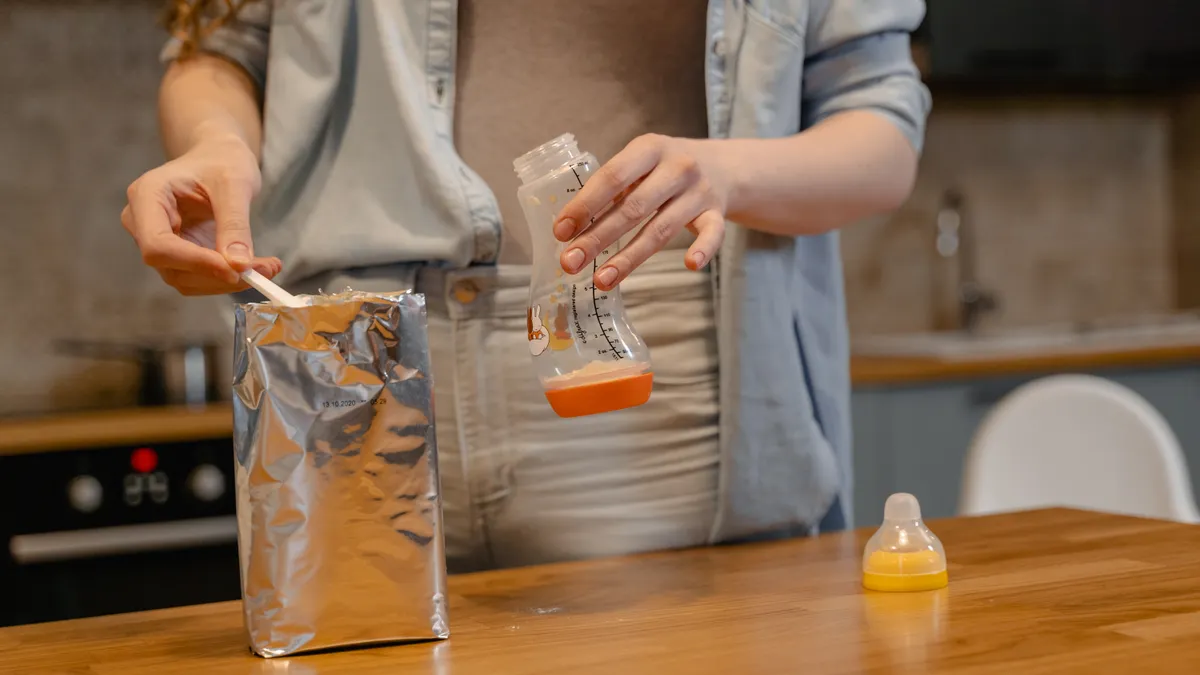
Last updated: November 18, 2026
Warm breast milk in a bottle warmer or a bowl of warm water, then stop as soon as it feels lukewarm, not hot. Never use a microwave. Heat only the amount your baby will drink, swirl the milk gently, and test the temperature on the inside of your wrist before feeding.
Key takeaways
- Use gentle heat, not direct heat. A bottle warmer or warm water bath is safer than a microwave.
- Stop warming early. Milk should feel warm, not steaming or hot.
- Swirl the breast milk bottle lightly so the fat mixes back in.
- Test a few drops on your wrist before you feed.
- If the milk came from the fridge or was thawed, warm it slowly and use the smallest amount needed.
How do I warm breast milk safely?
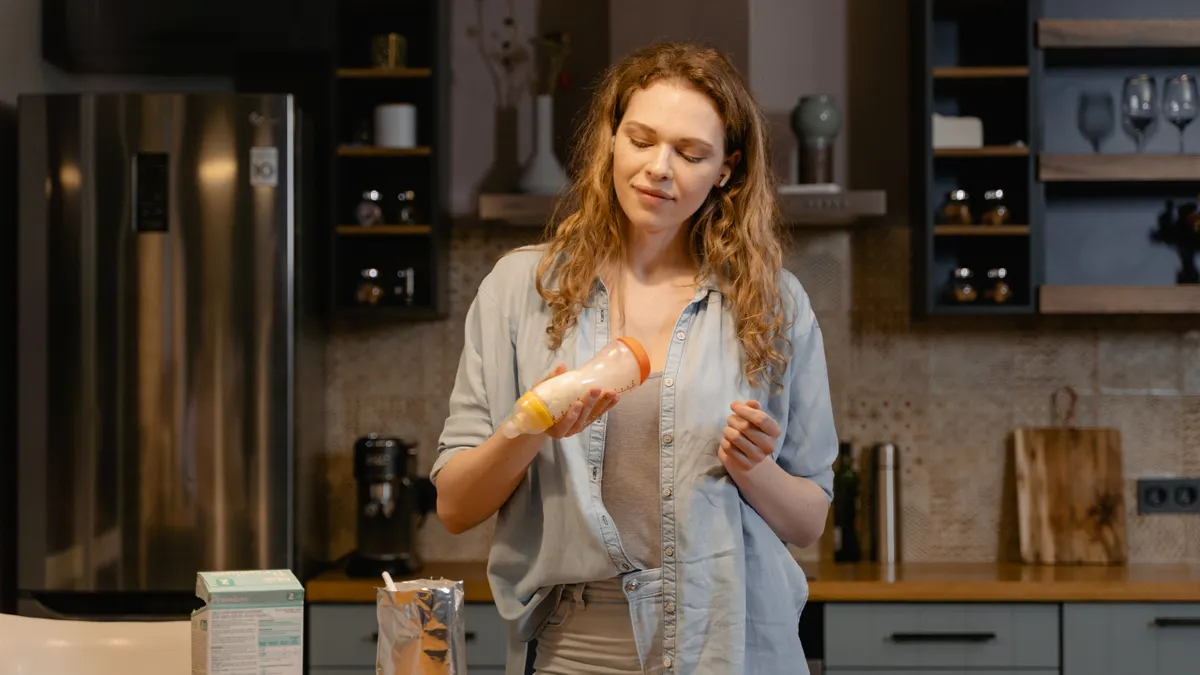
Warm breast milk safely by using low, even heat and checking the temperature before every feed. The goal is to take the chill off, not to make the milk hot. Breast milk that is overheated can lose some of the qualities parents are trying to preserve, so a gentle method matters.
A bottle warmer and a bowl of warm water are the two most practical options. The CDC and the NHS both give gentle handling guidance for expressed milk, and that same principle applies here: avoid fast, uneven heat and keep the milk moving gently. If the milk is for a premature baby, slow warming is even more useful because you want the feed to stay predictable and calm.
Use only the amount you need for that feed. Warming a full bottle to save time often leads to waste, and once milk is warmed, it should not be repeatedly heated and cooled. A better habit is to pour out a smaller breast milk bottle and leave the rest undisturbed.
What is the safest way to warm a breast milk bottle?
The safest way to warm a breast milk bottle is to place it in warm water or a bottle warmer until it reaches a comfortable temperature. Start with a clean bottle, add the milk you plan to use, and heat it gently instead of exposing it to direct heat.
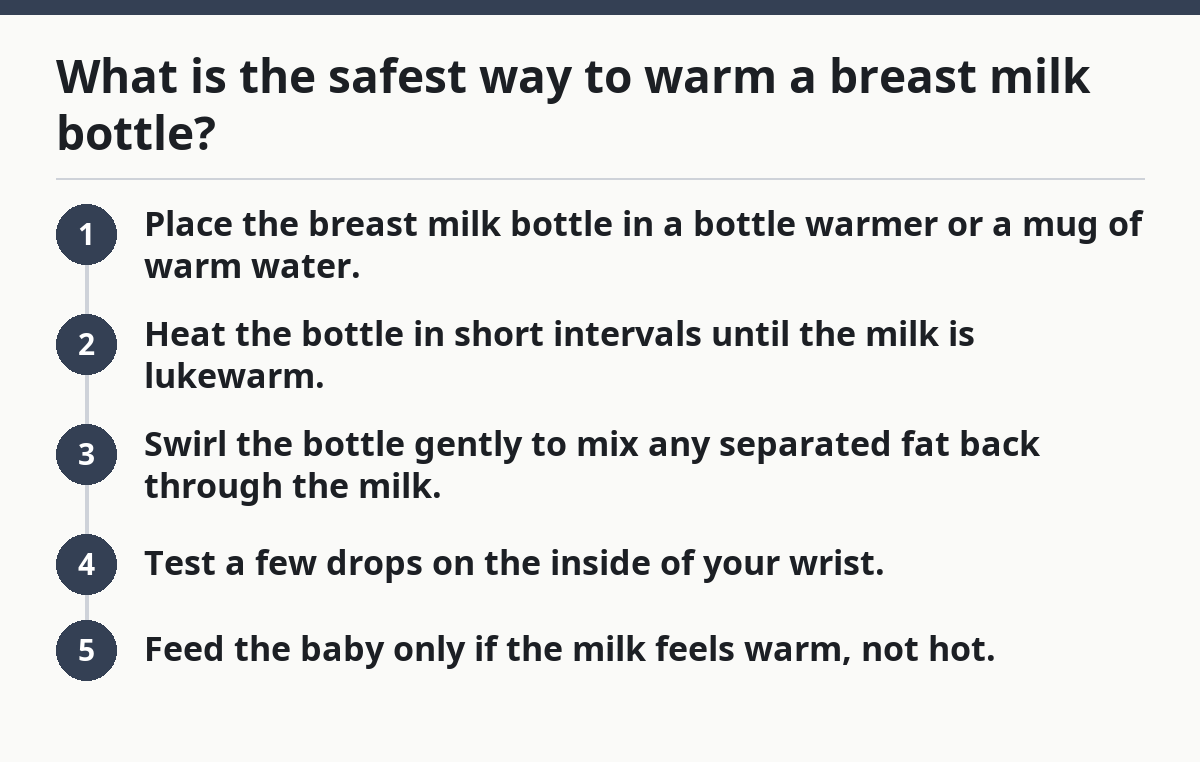
- Place the breast milk bottle in a bottle warmer or a mug of warm water.
- Heat the bottle in short intervals until the milk is lukewarm.
- Swirl the bottle gently to mix any separated fat back through the milk.
- Test a few drops on the inside of your wrist.
- Feed the baby only if the milk feels warm, not hot.
A bottle warmer is helpful because it keeps the heat more even than a stove or kettle. A bowl of warm water works too, as long as the water is warm rather than boiling. The milk should warm gradually, not jump from cold to hot in one step.
Do not shake the bottle hard. Swirling is enough, and it is kinder to the milk. Hard shaking can create a lot of foam, which makes it harder to tell whether the milk is evenly warmed. A light swirl takes a few seconds and keeps the bottle easier to read.
Can you use warm water without overheating it?
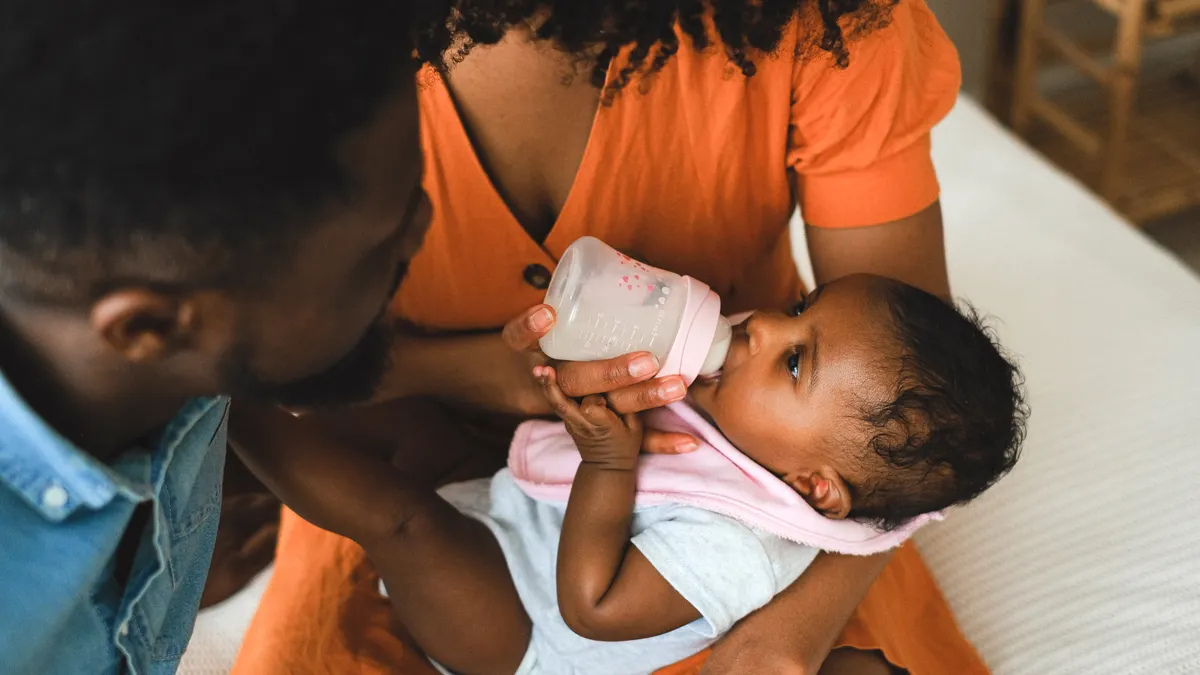
Yes, warm water is one of the easiest ways to warm breast milk without overheating it. It gives you more control than a microwave and less chance of hot spots than direct heat.
Use water that feels warm to your hand, not hot enough to sting. If the water is too hot for your fingers, it is too hot for the milk. Set the breast milk bottle in the water and let it sit, turning it once if needed so the warmth spreads evenly. This method is simple, cheap, and easy to repeat when you are at home.
The trade-off is speed. Warm water takes longer than a microwave, so it is not the best choice when a baby is already upset and crying hard. It is also less exact than a bottle warmer, since water temperature can cool down while the bottle sits. Still, for most families, it is a safe and practical default.
If the milk came straight from the fridge, expect the warming time to be longer than milk that is only cool. If it was thawed, warm it the same gentle way and stop as soon as it reaches a comfortable temperature. Do not pour boiling water over the bottle. That can heat the outside fast while the center stays cooler, which is exactly the kind of uneven warming to avoid.
Why should I avoid the microwave?
You should avoid the microwave because it can heat breast milk unevenly and create hot spots. Those hot spots may burn a baby’s mouth even when the bottle feels fine in your hand.
Microwaves also make it harder to judge temperature. A bottle can feel only warm at the neck and much hotter near the center, especially if the milk has not been mixed. That is a real risk with breast milk bottle warming, and it is why microwave use is not the right method for this job.
This is the clearest “do not do this” rule on the page. It is not a small preference or a style choice. A microwave is wrong for warming breast milk because safety depends on even heat, and the microwave does not give that reliably.
If time is the problem, use a bottle warmer or warm water instead. Those methods are slower, but the extra minute or two is worth it. A feed that starts with safely warmed milk is easier to manage than a feed interrupted by a bottle that is too hot and has to cool down again.
How do I know the milk is not too hot?
You know the milk is not too hot when it feels warm, never hot, on the inside of your wrist. That quick wrist test is the simplest check before a feed.
Put one or two drops on the inside of your wrist after swirling the bottle. The milk should feel neutral to slightly warm, similar to bath water that is comfortable on skin. If it feels hot, let it sit for another minute and test again. If it feels chilly, warm it a little longer in the bottle warmer or warm water.
A thermometer is not usually necessary for this step. The wrist gives you a fast, practical check that is easy to repeat every time. What matters is consistency: the same person should use the same quick test each time so the feed starts at a familiar temperature.
Do not rely on how the bottle looks. Clear milk can look calm even when the middle is hotter than the outside. Do not rely on a quick shake either. Swirling and wrist-testing are better because they check the milk, not just the container.
What changes if the milk is from the fridge or thawed?
Milk from the fridge usually needs a little more time, while thawed milk needs gentle warming and careful handling. In both cases, the main rule stays the same: warm slowly and stop early.
Fridge-cold milk may need a longer soak in warm water or a few more minutes in a bottle warmer. Keep the bottle upright and swirl it once or twice during warming so the temperature spreads through the milk. This helps avoid a warm edge and a cold center.
Thawed milk can separate, so swirl it gently before and after warming. Do not shake it hard. If it still has ice crystals, continue thawing first; if it is already fully thawed, warm it only enough to take off the chill.
This is where many generic guides get vague. They say “heat gently,” but they do not say what to do when the milk starts cold or already thawed. The answer is the same method, just with more patience. You are not trying to make the milk hot; you are trying to make it comfortable for a feed.
What mistakes overheat breast milk most often?
The mistakes that overheat breast milk most often are using a microwave, using water that is too hot, and warming too much milk at once. Each one creates extra heat that is hard to undo.
A microwave can make dangerous hot spots. Water that is near boiling heats the outside of the bottle too fast. Warming a larger amount than the baby will drink makes it harder to stop at the right point, and any leftover milk may go to waste.
Swirling too aggressively is another mistake. It does not usually overheat the milk by itself, but it can make the bottle foamy and harder to judge. Light swirling is enough and keeps the milk mixed without making a mess.
The simplest correction is to slow down. Use a bottle warmer or warm water, warm only the amount needed, and test the milk on your wrist every time. That routine is boring, and that is exactly why it works.
Can I skip warming breast milk altogether?
Yes, you can skip warming breast milk altogether if your baby accepts it cold or cool. Many babies drink milk straight from the fridge or at room temperature without a problem.
Skipping warming is often the easiest way to avoid overheating. It saves time, cuts down on equipment, and removes the chance of making the milk too hot. If your baby drinks it happily, there is no rule that says breast milk must be warmed.
The downside is that some babies prefer milk at a warmer temperature, especially during night feeds or after time in the fridge. In that case, use the gentlest warming method rather than forcing a temperature that does not suit the feed. For families of premature babies, the feeding plan may be more specific, so follow the care team’s guidance if you have one.
For more on milk handling, the breast pumping and feeding hub for breastfeeding storage, safety, and milk handling is the better place to go next. This page stays with the warming step only, so it does not crowd out the storage rules and thawing details that belong elsewhere.
Can you microwave breast milk?
No, you should not microwave breast milk. A microwave can heat the milk unevenly and create hot spots that may burn a baby’s mouth even when the bottle feels only warm on the outside.
Use a bottle warmer or a bowl of warm water instead. Those methods heat more evenly and give you more control.
How warm should breast milk be?
Breast milk should be warm, not hot. It should feel comfortable on the inside of your wrist and should never steam or sting your skin.
If it feels hot to you, it is too hot for the baby. Let it cool and test again before feeding.
Do you need to warm breast milk at all?
No, you do not need to warm breast milk at all if your baby will drink it cold or cool. Many babies take it that way without trouble.
Warming is a preference, not a requirement. If you do warm it, keep the heat gentle and stop as soon as it is comfortably warm.
Drafted with AI; not yet reviewed by a person.