Last updated: November 18, 2026
Quick Answer: In 4 steps, you can combine breast milk from different pumping sessions safely when both portions are cold or the warmer one has been chilled first. The practical way is to chill fresh milk in the refrigerator before pouring it into already cold milk, then keep the mixed milk cold and use the oldest milk first.
Key Takeaways
- Cool fresh milk first, then combine it in a clean breast milk storage bottle or milk storage bag.
- Mix warm and cold milk only after the warm milk has cooled.
- Wait until milk is refrigerator-cold before combining it with other chilled milk.
- The oldest milk in the container sets the storage clock.
How do I combine breast milk safely?
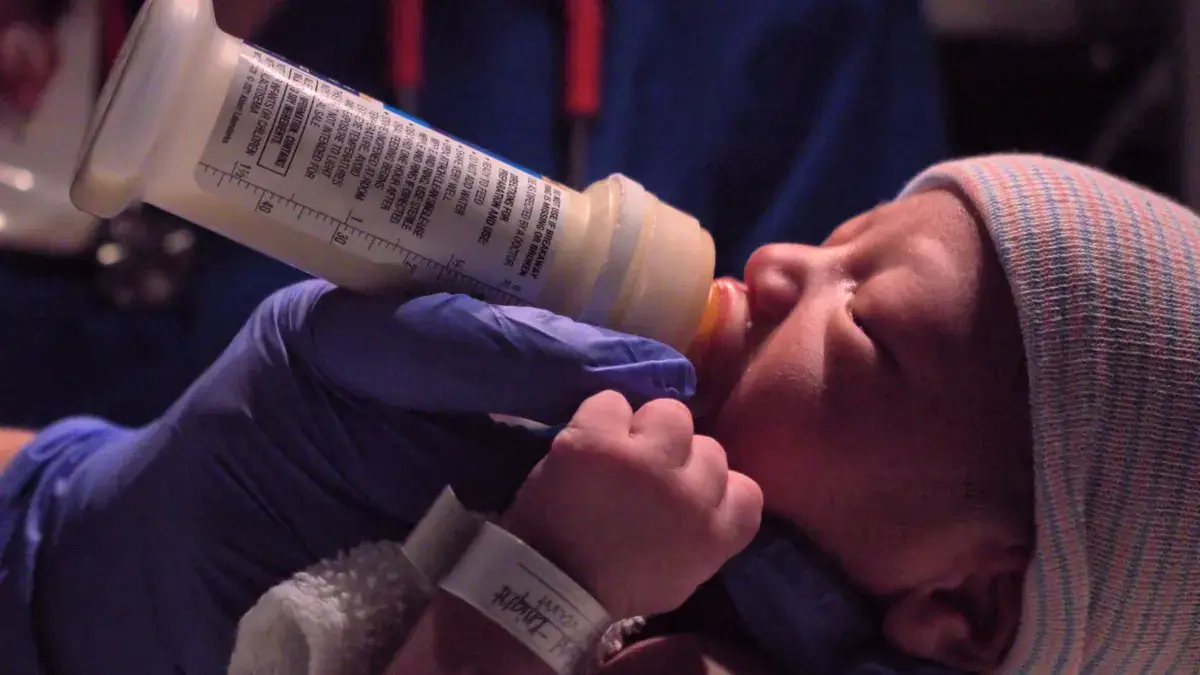
You combine breast milk safely by cooling fresh milk, pouring it into a clean breast milk storage bottle or milk storage bag, and keeping the mixed milk in the refrigerator. If the milk from one session is still warm, do not pour it straight into a cold batch. Cool it first so the whole container stays cold.
- Wash your hands and prepare a clean breast milk storage bottle or milk storage bag before you pour.
- Cool the fresh milk in the refrigerator if the milk from the new session is warmer than the milk already stored.
- Pour the cooled milk into the container with the older milk, leaving room at the top if you may freeze it later.
- Store the combined milk in the refrigerator right away at a cold, steady temperature.
- Use the oldest milk first so nothing sits longer than it should.
According to the CDC, expressed breast milk should be handled with clean containers and kept cold as soon as practical, and the American Academy of Pediatrics gives similar storage guidance for pumped milk. Sources: CDC breast milk storage guidelines and AAP HealthyChildren breast milk storage.
The key point is temperature, not the exact time of day. A same-day morning pump and a same-day evening pump can be combined once both are cold. That matters most for parents who pump several times a day and want fewer containers to track.
Can you mix warm and cold breast milk?
You can mix warm and cold breast milk only after the warm milk has cooled first. Warm milk added to cold milk can raise the temperature of the whole container, which is the part that creates trouble.
The practical rule is simple: chill the new milk in the refrigerator before combining it with the milk already stored there. If the milk is still warm from pumping, let it cool until it matches the refrigerator-cold milk as closely as possible. This avoids repeated warming and cooling of the whole batch.
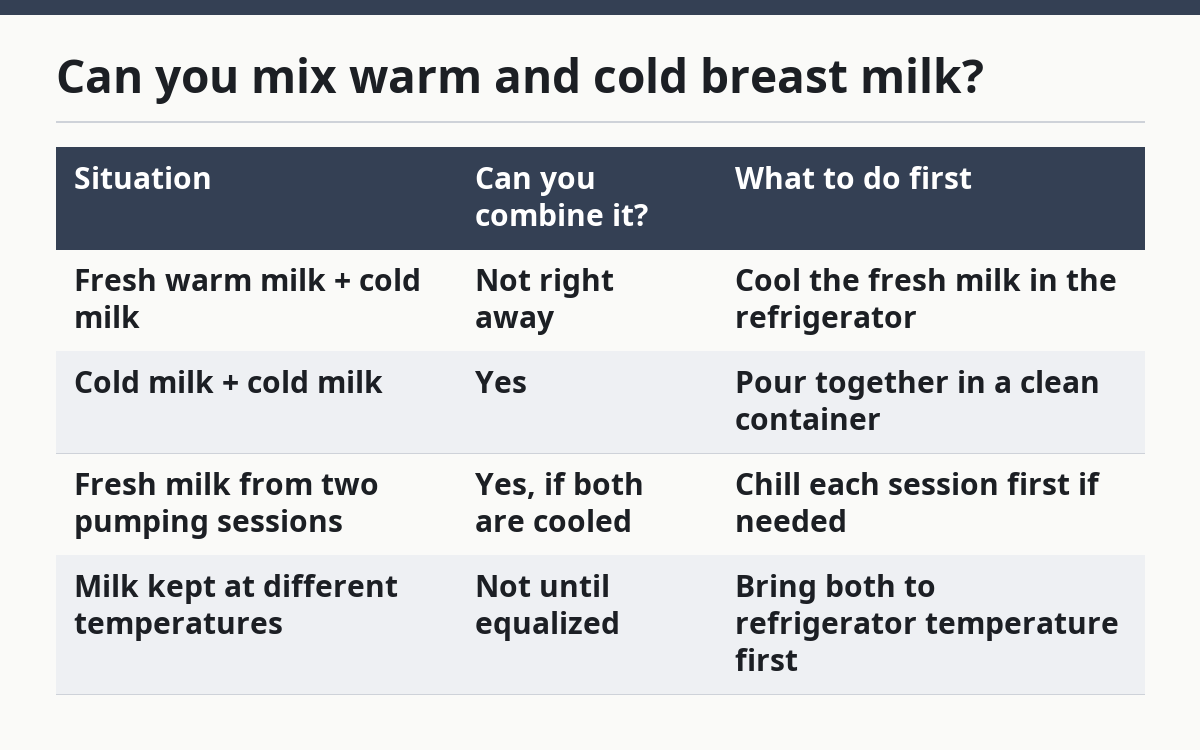
This is where many generic guides get sloppy. They say “combine milk” without saying what to do about temperature, but that is the part that matters. If you are deciding between two options, this table shows the safer choice.
| Situation | Can you combine it? | What to do first |
|---|---|---|
| Fresh warm milk + cold milk | Not right away | Cool the fresh milk in the refrigerator |
| Cold milk + cold milk | Yes | Pour together in a clean container |
| Fresh milk from two pumping sessions | Yes, if both are cooled | Chill each session first if needed |
| Milk kept at different temperatures | Not until equalized | Bring both to refrigerator temperature first |
For readers who want the broader storage rules, this page fits inside the site’s breastfeeding storage guide and milk handling basics, where the storage questions are grouped by topic instead of mixed together.
How long should milk cool before combining?
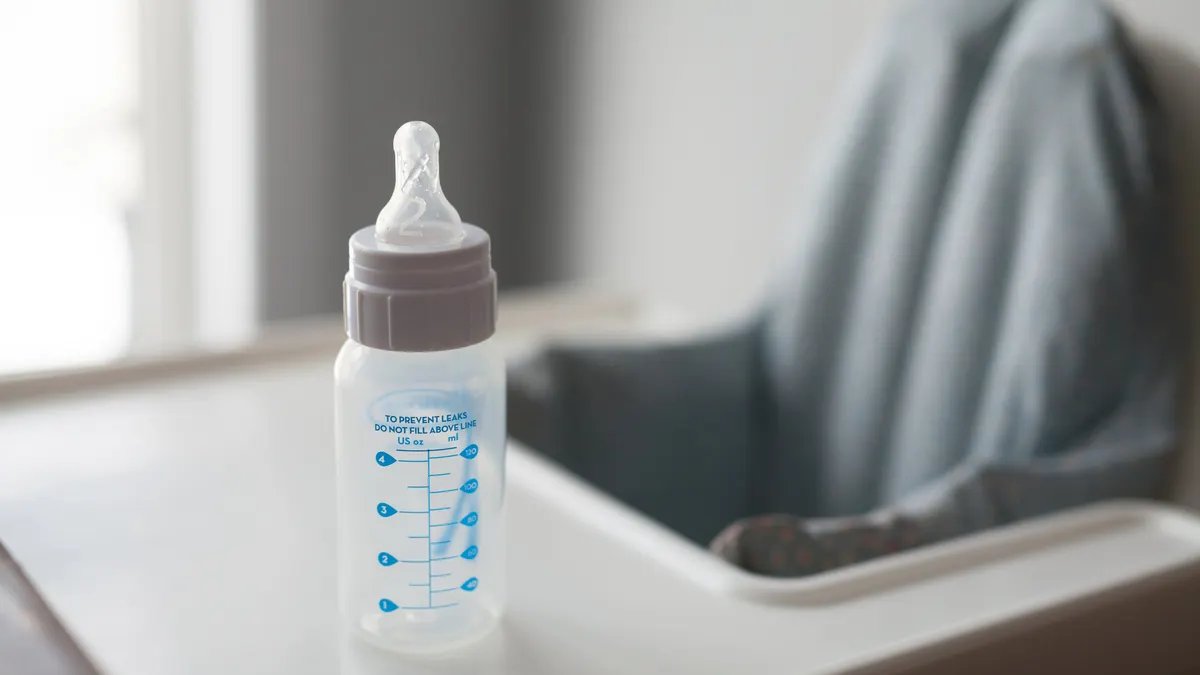
Milk should cool until it is refrigerator-cold before you combine it with other chilled milk. I am not giving a fixed minute count, because the cooling time depends on the amount of milk and the refrigerator, not a single universal number.
Use the feel of the container as a clue only if it is safe to do so, but the better habit is to wait until the milk has clearly cooled in the refrigerator. If the new milk still feels warm, leave it out of the mixing step and give it more time in the fridge.
This waiting step may feel annoying, especially if you pump often, but it protects the rest of the batch. A warm splash can raise the temperature of milk that was already cold. That can shorten how long the mixed milk stays in good condition.
If you store milk in small breast milk storage bottles, cooling first is easier because small amounts chill faster than one large full bottle. If you use milk storage bags, set them flat in the refrigerator so they cool evenly before you combine them later in a bottle. The CDC’s milk storage guidance emphasizes cold storage after pumping, and that advice fits this step directly.
What changes when you combine milk from different sessions?
Combining milk from different pumping sessions changes the storage clock, because the oldest milk in the container sets the pace. Once you mix sessions, the combined milk is no longer “new” milk from the later session alone.
That means the simplest rule is to label and use the batch based on the earliest pumped milk in it. If one session is from earlier in the day and the other is from later that same day, the older milk still determines when the combined milk should be used.
This is why combining works best when you pump often but store in a few larger containers. It reduces clutter in the refrigerator, but it also puts more responsibility on tracking what went in first. Since the oldest milk controls the batch, mark the container with the earliest session date and time.
Do not use combining as a way to ignore milk that has already been sitting around. The point is to keep milk cold and organized, not to create one giant bottle that hides the age of the first session. A neat container is not safer by itself; the cold chain is what matters.
What should I use: bottles or bags?
Use breast milk storage bottles if you plan to combine milk several times in the same day, and use milk storage bags if you want flatter storage in the refrigerator or freezer. Bottles are easier for repeated pouring; bags are better when you want less bulk.
A bottle gives you a stable container for adding cooled milk from more than one session. A bag works too, but it is easier to spill and harder to pour into if the milk is still moving around. If you combine milk often, a bottle usually feels simpler at the sink.
| Container | Good for | Drawback |
|---|---|---|
| Breast milk storage bottle | Repeated combining, easy pouring | Takes more room in the fridge |
| Milk storage bag | Flat storage, less bulk | Harder to combine cleanly |
| Small bottle first, larger bottle later | Same-day sessions | Needs careful tracking of what was added first |
Pick one method and keep it consistent for the day. That reduces the chance of mixing warm and cold milk by mistake. It also makes it easier to see how much milk came from each pumping session, which matters when you want to use the oldest milk first.
What mistakes should I avoid?
You should avoid mixing warm milk into cold milk, combining milk without cooling it first, and losing track of which session is oldest. Those mistakes do not just create confusion; they can change how long the milk stays usable.
The most common error is pouring fresh milk straight into a cold container because it saves time. It does save a minute, but it risks warming the whole batch. Another common slip is filling a bottle so full that there is no room for expansion later if the milk is frozen.
A few habits make the job cleaner:
- Cool first before combining if one session is warmer than the other.
- Use one container type for the day so the system stays simple.
- Keep the refrigerator cold and put the milk back right after pouring.
- Follow the oldest milk when deciding what to use next.
This is not the right method for milk that you are unsure about for safety reasons, or for milk that has sat out too long for your comfort. If anything about the milk seems off, do not try to rescue it by mixing it with fresher milk. That only spreads the problem.
How do I store mixed breast milk after combining it?
You store mixed breast milk in the refrigerator right away after combining it, and you treat the batch as one container from the oldest milk forward. The mixed milk should stay cold and should not be left on the counter after pouring.
If you plan to use it soon, keep it in the refrigerator in the same breast milk storage bottle or milk storage bag you used for combining. If you plan to freeze it later, leave a little space in the container because milk expands when frozen. That small gap can help reduce pressure on the bottle or bag, but check the container’s instructions if you are unsure.
A cautious habit is to keep the refrigerator as the holding place until you are ready to use the milk. Do not warm and re-cool the same mixed batch more than needed. Repeated temperature swings are the opposite of what you want.
For parents reading this as part of a larger routine, the answer sits inside the same larger storage system as the rest of the site’s breastfeeding storage and milk handling guidance. The combining step is only one part of that routine, but it is the part that often causes the most uncertainty.
Can you mix warm and cold breast milk?
Yes, but only after the warm milk has cooled first. Pouring warm milk straight into cold milk can raise the temperature of the whole container, so the safer move is to chill the fresh milk in the refrigerator before combining it.
Can you combine milk from different days?
Yes, if you are following safe storage rules and you keep track of the oldest milk in the mix. The earliest pumped milk should guide when the combined milk is used, because once the milk is mixed, the batch follows the oldest portion.
How do I store mixed breast milk after combining it?
Store mixed breast milk in the refrigerator right away in a clean container. Keep it cold, use the oldest milk first, and freeze it only if you plan for that from the start and leave room for expansion.
Drafted with AI; not yet reviewed by a person.