
Last updated: November 18, 2026
Quick Answer: How to use breast milk collection cups is simple in 3 steps: wear them in a nursing bra, empty them before they get close to full, and wash them after use. Breast milk collection cups are worn inside a nursing bra to catch leaking milk and keep your clothes dry. Put them on before milk starts to leak, empty them regularly, wash them after use, and do not treat them as a pump. If you are unsure about fit or milk supply, consult a lactation professional or your clinician. NHS breastfeeding guidance and CDC breast pump and milk storage guidance are useful starting points.
Key takeaways
- Collection cups sit inside the bra and gather milk that would otherwise soak a pad or shirt.
- They help most with small, steady leaks, not with full milk removal.
- A snug fit matters because a cup that shifts can leak at the edge.
- Empty and clean the cups on a regular rhythm, not only when they feel full.
- They are useful for leak control, but they do not replace a breast pump for milk removal.
What are breast milk collection cups?

Breast milk collection cups are small cups that sit inside a nursing bra and collect leaked milk from the nipple area. They are also called milk collection cups, and they are made for passive leak management, not active pumping. That makes them different from a breast pump and different from a silicone milk collector.
The main job is simple: catch milk before it wets a bra, shirt, or nursing pad. That can be useful between feeds, at work, during errands, or any time one breast leaks while the baby feeds on the other side. In the same way, they can help if let-down happens unexpectedly when you hear a baby cry or go too long between milk removals.
This page is for the parent who wants a clean, low-fuss way to manage leaking. It is not the right tool if the goal is to increase supply, fully empty the breast, or replace pumping after a feed. For broader guidance on equipment, the breastfeeding equipment and pumping hub is the place to start.
How do you wear collection cups in a nursing bra?
You wear collection cups inside a nursing bra so the cup opening sits over the nipple and the rim stays flat against the skin. The bra holds the cup in place, which is what keeps the milk from spilling into the bra cup. A cup that sits crooked can leak at the side or press uncomfortably.
-
Open the collection cup and check the rim. Make sure the cup is clean, dry, and not warped before use. A bent rim can create a gap and leave milk on the skin or in the bra.
-
Place the collection cup over the nipple. Center the opening on the nipple area so milk flows into the cup instead of along the side. The fit should feel snug, not pinched.
-
Set the collection cup inside the nursing bra. Close the bra so the bra itself holds the cup steady. A supportive bra keeps the cup from slipping when you bend, lift, or walk.
-
Adjust the collection cup for comfort. If the edge digs in, shift the cup slightly or try a different bra setting. Comfort matters because a cup that hurts is hard to keep on for long stretches.
-
Check the collection cup after a short wear period. Look for a dry edge and a centered position. If milk has pooled at the rim, the cup may need a better fit or more frequent emptying.
-
Remove the collection cup before a long stretch of wear. Do not leave it on all day without checking it. A cup that fills too much can spill when you move or bend. If you are unsure about fit or pressure, consult a lactation professional.
In practice, the best use case is usually a predictable leak pattern, such as one side that drips during let-down. The worst use case is a tight bra with no room for the cup, because the pressure can make the cup uncomfortable and more likely to shift. The NHS breastfeeding advice also recommends getting help if pain or fit problems keep happening.
How do you collect leaks without making a mess?

You collect leaks by putting the cup on before milk starts dripping and keeping the opening aligned while milk flows naturally into it. That means using the cup as a catcher, not as a squeeze-and-draw tool. If the cup only goes on after milk has already soaked the bra, it has missed the point.
The cleanest approach is to set up before a feed, before a pumping session, or before a time you know leakage often happens. Some parents leak on one side during a feed on the other side, and some leak between feeds when the breasts feel fuller. A collection cup can handle both situations if it is checked before it gets too full.
A simple comparison helps:
| Tool | Main job | Best use | Weak point |
|---|---|---|---|
| Breast milk collection cup | Catch leaks in a bra | Light, passive leakage | Not for full milk removal |
| Nursing pad | Absorb leaks | Backup protection in a bra | Milk stays trapped against skin |
| Breast pump | Remove milk | Scheduled milk removal | More parts and setup |
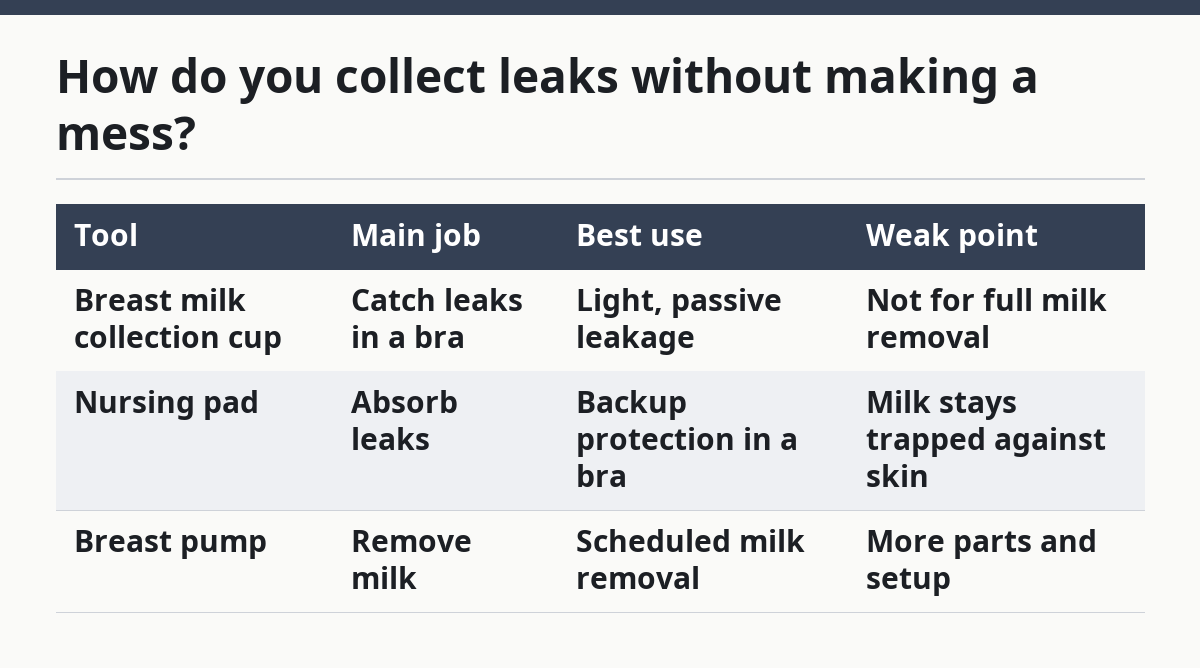
The cup works best when leakage is small to moderate and the bra is stable. It works poorly if milk gushes strongly or if the cup is left in place until it overfills. If the cup sloshes when you stand up, it is time to empty it. For a parent managing a premature baby, that distinction matters.
Milk loss is frustrating, but a collection cup is still about leak control, not feeding management. If you need a plan for pumping or supply concerns, the CDC guidance on expressing and storing milk is more relevant.
When should you empty collection cups?
You should empty collection cups before they get close to full, and you should not wait until milk is near the rim. The exact timing depends on how much you leak, but the rule is simple: empty them often enough that movement does not cause spills. A cup that stays half full is far safer than one that is nearly at the top.
Emptying is easiest at a sink or with a clean container ready nearby. Remove the cup carefully, tilt it over a clean container, and pour the milk without splashing. If the cup is warm from wearing, keep the opening steady so milk does not run down the outside of the cup.
Do not tip the cup too quickly, because a fast pour can waste milk. Do not try to top off an already full cup by adding fresh leaks on top of old milk for hours. That raises the risk of spill and makes cleaning harder later.
A good habit is to check the cup when you change sides, after a feed, or after a short stretch of time when you know leaking is common. If the cup collects only a small amount, that is still useful. The point is not volume; the point is less mess. If you are not sure about the safest rhythm, consult a lactation professional.
How do you clean breast milk collection cups?
You clean breast milk collection cups by washing them soon after use with warm water and the washing method the maker recommends. A cup that sits unwashed can leave milk residue behind, and dried milk is harder to remove later. Cleaning also matters because the cup stays close to skin for long periods.
Start by emptying the milk, then rinse the cup so residue does not dry on the surface. Wash all parts that touched milk, including the rim and any lid or insert if the model has one. Let the pieces dry fully before the next use so moisture does not sit in the cup.
One simple rule helps: do not stack wet parts in a closed bag or drawer. Trapped moisture can leave the cup musty and unpleasant the next time you wear it. If a cup is made of several pieces, keep the parts together so the set is ready for the next wear. That is especially true when a collection cup has several pieces or a tight seal.
This page does not cover breast pump part cleaning, and that matters. Pump parts can have different cleaning rules, so do not assume the same routine fits every item in your feeding kit. If the collection cup came with care instructions, follow those directions first, and check CDC cleaning guidance if you want a general reference.
When do collection cups help, and when do they not?
Collection cups help when the problem is leaking, not low supply or empty breasts. They are a good fit for parents who need a discreet way to catch milk during let-down, between feeds, or on the side not being used. They are not a good fit if the goal is to actively express milk or replace a pump.
A collection cup can be the wrong choice if you leak very heavily, if your bra cannot hold the cup steady, or if pressure on the breast makes you sore. It can also be the wrong choice if you need a tool that removes milk on a schedule, since a cup only catches what is already leaking. In that case, a breast pump does a different job.
The trade-off is clear: less setup and less bulk, but also less control over milk removal. That is why collection cups are best treated as a leak-management tool. They solve a real problem, but not every feeding problem.
For a family feeding a premature baby, that honesty matters. A small accessory can make day-to-day life easier, but it should not be mistaken for a feeding plan. If you want help choosing between tools, the breast pump guide can help.
What mistakes should you avoid?
You should avoid wearing collection cups too long, overfilling them, and assuming every leak tool works the same way. Those mistakes cost comfort, milk, and time. A cup that stays in place for hours without checking can spill; a cup used like a pump will disappoint; a cup used in the wrong bra can shift and rub.
The first mistake is using them as a substitute for pumping when milk removal is needed. That leaves milk behind and can make the session less useful. The second is wearing them with a bra that is too loose, because the cup then slides and leaks. The third is waiting until the cup feels obviously full, which often means it is already near spill point.
A fourth mistake is ignoring the fit of the cup opening. If the rim does not sit flat, milk can run under the edge and soak the bra anyway. A quick check in the mirror before leaving the house can save you from a wet shirt later.
One last mistake is treating every brand the same. Different collection cups have different shapes, lids, and cleaning directions, so the maker’s instructions matter. If you are unsure, consult a lactation professional or follow the brand’s care guide. That is especially true when a product has several pieces or a tight seal.
Are milk collection cups better than pads?
Milk collection cups are better than pads when you want to catch and save leaked milk. Pads are better when you want the easiest, lowest-fuss backup and do not care about saving the milk. A cup needs more setup and emptying, while a pad is simpler but only absorbs.
Can collection cups replace a breast pump?
No, collection cups do not replace a breast pump. They catch milk that leaks on its own, while a pump removes milk on purpose. If the goal is milk removal, supply support, or a scheduled expression session, a pump is the different tool. The CDC recommends different handling steps for expressed milk, which is another reason not to treat the cup and pump as the same device.
How often should you empty collection cups?
Empty collection cups before they get close to full, and check them often enough that movement will not spill milk. For many people, that means checking after a feed, after a short stretch of wear, or whenever the cup feels heavy. The right rhythm is the one that prevents overflow. If the pattern keeps changing, ask a lactation professional which schedule fits your routine.
Drafted with AI; not yet reviewed by a person.