
Last updated: November 18, 2026
Key Takeaways
- Brief, mild soreness at latch-on can be normal, but ongoing or sharp pain needs review.
- Pain usually comes from compression, stretching, or inflammation that milk removal alone won’t fix.
- A painful latch is a warning sign, not something to ignore.
- Engorgement often feels like both breasts are full, tight, and pressured, then eases after milk removal.
Breastfeeding pain is common in the first days, and this article on Why breastfeeding hurts in the beginning and when pain is not normal explains what is expected and what is not. Breastfeeding pain should not be sharp, worsening, or still severe after feeds, and if pain comes with cracking, fever, hard breast areas, or a baby who cannot stay latched, consult a professional. Early nipple tenderness can happen while your nipples and breasts adjust; NHS breastfeeding guidance and the CDC both advise getting help when pain is severe or persistent.
What normal breastfeeding pain feels like in the first days
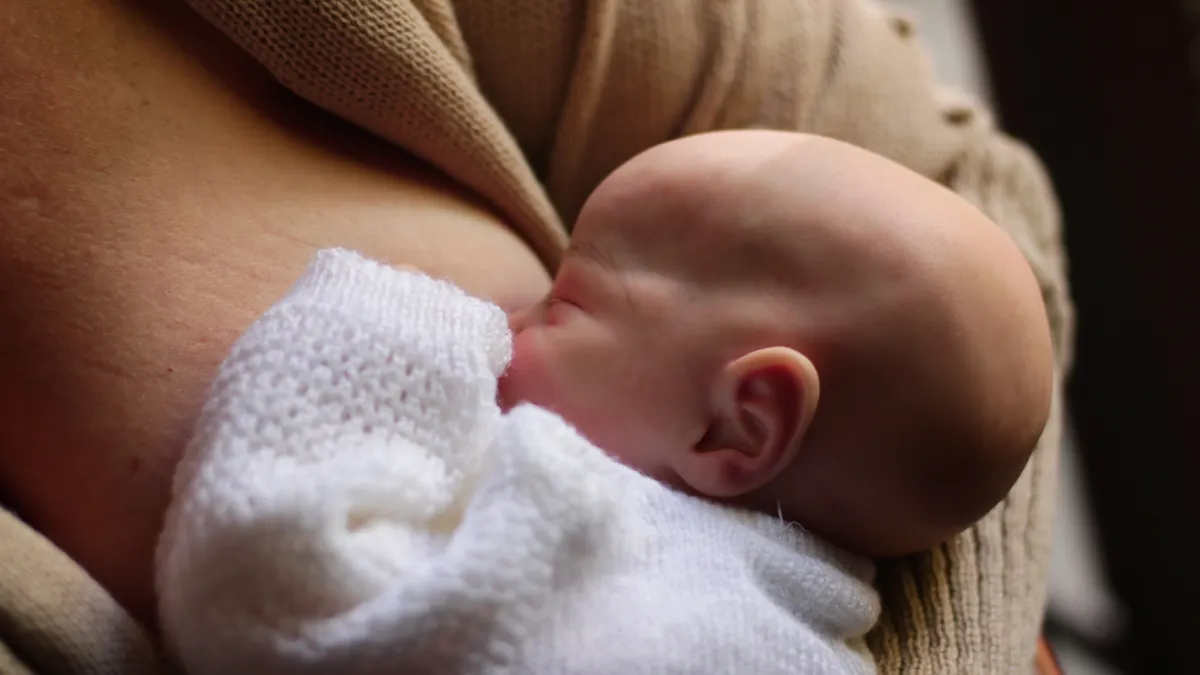
Normal breastfeeding pain usually feels like tenderness, stretching, or brief discomfort at latch-on, then eases within about 30 to 60 seconds. The nipples may look a little pink or feel sensitive for the first few days, especially if you are feeding 8 to 12 times a day and your breasts are suddenly getting much more use than they are used to.
That early soreness happens because skin that was not being pulled and compressed before is now doing repetitive work every 2 to 3 hours. A newborn mouth is tiny, the jaw is learning, and milk transfer is still getting established. If the latch is reasonable, the pain should not build during the feed. It should not make you dread every session or leave your nipples flattened like a lipstick after most feeds.
A useful way to think about it: mild discomfort that fades over the first week is common; pain that stays the same or gets worse is not something to just push through. The exact timeline varies, but persistent pain past the first 1 to 2 weeks deserves review from a lactation consultant, nurse, midwife, or pediatric clinician.
Normal pain also tends to stay local. It is mostly at the nipple or just behind it, not deep in one breast with redness, fever, or body aches. If you are seeing damage, not just soreness, that is a different problem.
Why breastfeeding pain usually happens
Breastfeeding pain usually happens because the nipple or breast tissue is being compressed, stretched, or inflamed in a way that milk removal alone does not fix. The four common causes are a shallow latch, engorgement, nipple damage, and infection such as thrush or mastitis. La Leche League and the Academy of Breastfeeding Medicine both note these as common clinical causes of breastfeeding pain.
A shallow latch means the baby is taking too much nipple and not enough breast tissue into the mouth. That creates friction on the nipple and often causes pain for the whole feed. The nipple may come out pinched, creased, or white at the tip.
Engorgement is another common source of pain, especially around days 2 to 5 after birth, when milk volume rises quickly. Breasts can feel firm, hot, swollen, and tight. A tight breast can make it harder for a baby to latch deeply, which then adds nipple pain on top of breast pressure.
Nipple trauma happens when the skin is rubbed, compressed, or cracked. Once the surface is broken, even a normal latch can sting badly. Milk, saliva, and repeated feeding keep that skin from resting.
Infection changes the picture. Thrush can cause burning nipple pain, sometimes between feeds, and may come with shiny, flaky, or unusually pink nipples. Mastitis usually causes one breast to hurt, feel hot or hard, and sometimes comes with fever or flu-like symptoms. If this sounds like what you are experiencing, consult a professional rather than treating it as routine soreness.
Is pain from a bad latch normal or a warning sign?
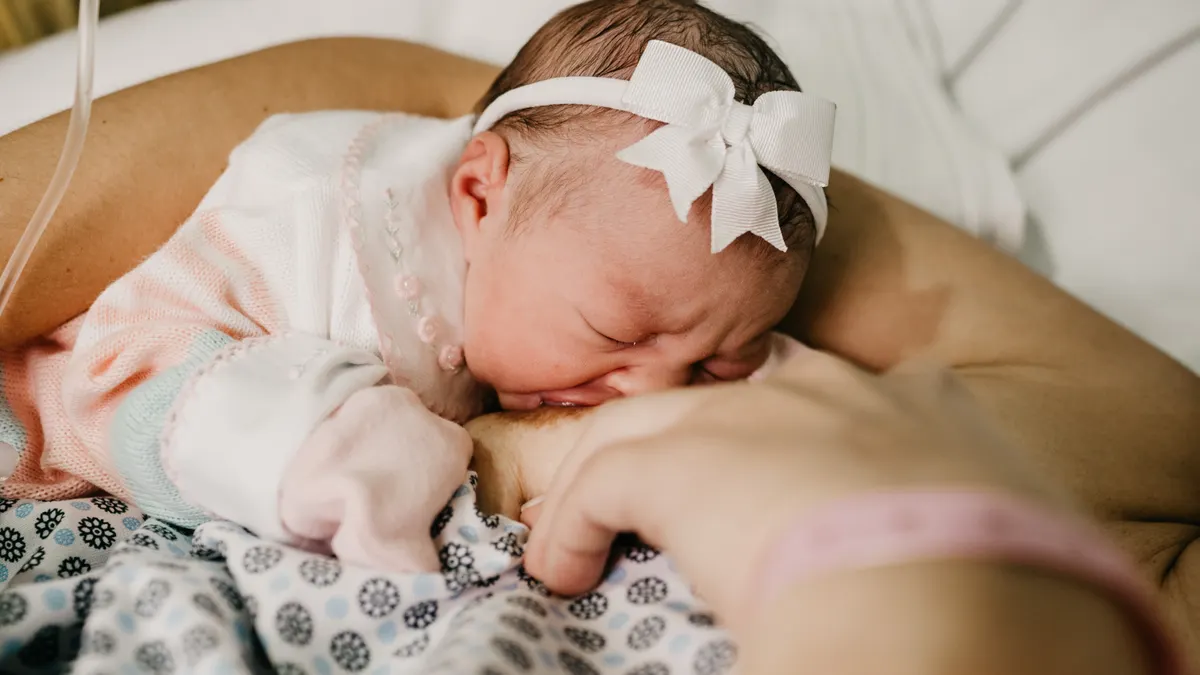
Pain from a bad latch is a warning sign, not a normal part of breastfeeding. A latch that hurts after the first few sucks, leaves damaged nipples, or makes you wince every time the baby starts feeding needs to be corrected rather than tolerated.
There is a difference between brief initial sensitivity and true latch pain. Brief sensitivity is short-lived and settles as the feed continues. Latch pain often feels sharp, pinching, biting, or grinding. It can happen on one side more than the other, and it may be worse at the start of the feed or whenever the baby slides shallow.
A baby with a poor latch often feeds noisily, slips on and off, or seems to need to reattach several times in one session. The nipples may look flattened, lipstick-shaped, blanched, or creased after feeding. That shape tells you the breast was squeezed in a way it should not have been.
Here is the part many people miss: a “painful but okay” latch usually does not improve just by enduring it. Pain trains you to tense up, and tension can make milk letdown harder. That can set up a bad cycle where feeding hurts, the baby feeds less effectively, breasts stay fuller, and the next feed hurts more.
If this sounds familiar, the next step is not to tough it out for another week. It is to get the latch checked by a lactation consultant or another breastfeeding clinician. This page is part of the broader latch, positioning, and comfort hub, which is where the technique side belongs.
How to tell engorgement from something more serious
Engorgement usually feels like bilateral fullness, tightness, and pressure that improves after milk is removed. Something more serious is more likely if the pain is one-sided, accompanied by fever, or comes with a red area that keeps spreading.
Engorgement often shows up when milk first comes in, usually around day 2 to 5 after birth. Breasts may feel hard enough that the areola is stretched tight, which makes it difficult for the baby to grasp enough tissue. The nipples can seem flat or hard to aim. That can make every latch hurt, even if the basic technique is not terrible.
The pain from engorgement is typically a heavy, swollen ache. The breasts may look shiny or swollen, and both sides often feel affected. Relief usually comes after feeding or pumping, even if only partially. If the breast softens and the pain drops, that pattern supports engorgement.
By contrast, mastitis is more likely if one breast becomes increasingly painful, warm, and red, and you also feel unwell. A clogged duct or localized inflammation can start with a tender lump, but if symptoms escalate over 12 to 24 hours or you develop fever, medical review is wise.
Engorgement matters because it can create a second problem: the baby cannot latch well onto an overfull breast. That turns a fullness problem into a nipple pain problem. Gentle milk removal and softening the areola before a feed can help, but severe swelling that is not easing is not something to ignore.
A practical way to check whether pain is normal
Pain is more likely to be normal if it is mild, short, and improving over several days; it is more likely to be a problem if it is sharp, persistent, or paired with nipple damage or illness. A simple 4-step check can help you sort that out.
-
Watch the first minute of the feed. If pain peaks for a few sucks and then settles within about 30 to 60 seconds, that fits early tenderness better than a major problem. If the pain stays sharp for the whole feed, consult a professional.
-
Look at your nipples right after feeding. A nipple that comes out round or only slightly elongated is reassuring. A nipple that is creased, flattened, white at the tip, or bleeding points to pressure that is too strong or too uneven.
-
Check the breast itself. Mild fullness in both breasts can be normal. A hard, hot, red, or very tender area, especially on one side, raises concern for mastitis or another inflammatory problem.
-
Track the pattern across 24 hours. Pain that is a little better on day 4 than day 2 is moving in the right direction. Pain that is the same or worse after 2 to 3 days, or that returns intensely every feed, needs help from a clinician or lactation consultant.
One common mistake is waiting until nipples are cracked open before asking for help. That delay costs you skin healing time and often makes feeding more painful than it needs to be. Another mistake is assuming every breast pain is just “letdown.” Letdown can tingle or ache briefly, but it should not cause fever or obvious nipple injury.
When pain is not normal and you should get help
Pain is not normal when it is severe, worsening, or comes with signs of infection, and you should get help the same day if you have fever, a red hot breast, pus, or flu-like symptoms. You should also get help promptly if the baby cannot latch, the pain is making you avoid feeds, or the nipples are cracked and bleeding.
Call a lactation consultant, midwife, obstetric clinician, pediatrician, or family doctor if any of these are true:
- pain lasts throughout the entire feed
- nipples are bleeding, blistered, or deeply cracked
- one breast has a hard lump that does not improve after feeding
- you have burning pain that continues between feeds and suspect thrush
- the baby is not gaining well, has too few wet diapers, or seems frustrated at the breast
- you need pain medicine just to get through every session
Mastitis is the clearest red flag in this list. It can progress quickly, and it is not something to “wait out” for a week. Thrush is less urgent than feverish infection, but it still needs evaluation because the pain can be intense and persistent.
This is also the point where a skilled eye matters. Breastfeeding problems often stack: a shallow latch causes nipple damage; damaged nipples make latch more painful; engorgement makes latch shallower; and then everything hurts more. A good clinician can look at the whole chain instead of treating only the last symptom.
If you need a medical source for the broader picture, the American Academy of Pediatrics and the Academy of Breastfeeding Medicine both publish breastfeeding guidance that covers latch problems, nipple pain, engorgement, and mastitis. The key point is simple: early soreness can be normal, but pain that is strong, lasting, or paired with infection signs is not a badge of honor.
What helps while you are waiting to be seen
You can reduce pain while you arrange help by keeping feeds frequent, softening an overfull breast before latching, and protecting cracked nipples from more friction. The aim is to lower pressure without skipping feeds for long stretches.
If breasts are very full, hand express or pump just enough to soften the areola for latching. A few minutes can make the breast easier for the baby to grasp. If the nipple is cracked, let it air-dry briefly after feeds and avoid products that sting or trap moisture unless a clinician has recommended them.
Changing which side you start on can also help if one nipple is more damaged than the other. Starting on the less painful side may let the baby latch more calmly before moving to the sore side. That is not a cure, but it can make feeds more tolerable for a day or two, and you should still consult a professional if the pain is not improving.
Pain medicine that is safe for you after birth can sometimes help you keep breastfeeding while the cause is being fixed. Because medication choices depend on your health, delivery details, and whether you are breastfeeding a newborn, ask a clinician or pharmacist before taking anything new.
What will not help is trying to “power through” severe pain for a week. That approach often turns a fixable problem into a longer one. The goal is not just to survive each feed; it is to get the feeding pattern comfortable enough that your nipples and breasts can heal.
How long should breastfeeding pain last?
Mild breastfeeding pain usually lasts only at the beginning of a feed and improves over the first several days. If pain is still strong after about 1 to 2 weeks, or if it is getting worse instead of better, it needs an assessment. Pain that never eases during feeds is not something to accept as normal.
Is breastfeeding pain normal in the first days?
Yes, mild nipple tenderness can be normal in the first days after birth. The pain should be brief and should gradually improve, not intensify. Sharp pain, bleeding, fever, or a breast that feels hot and hard is not normal and should be checked.
When should I get help for breastfeeding pain?
Get help as soon as the pain is severe, the nipples are damaged, or you have fever, redness, or a hard tender breast. Also get help if the baby cannot latch well or feeding is making you dread every session. Early support can prevent a small problem from becoming mastitis, thrush, or ongoing nipple trauma.
Drafted with AI; not yet reviewed by a person.