Last updated: November 18, 2026
Quick Answer: how to hand express breast milk step by step usually takes 5 to 10 minutes, and the basic method is to wash your hands, position your fingers behind the areola, press back toward the chest wall, then compress and release in a steady rhythm until milk starts to flow.
Hand expression is a simple way to remove breast milk with your hands when a pump is unavailable, uncomfortable, or more effort than you need. This guide to how to hand express breast milk step by step covers the basic method: wash your hands, position your fingers behind the areola, press back toward the chest wall, then compress and release in a steady rhythm until milk starts to flow.
Key takeaways
- Hand expression works best when the breast is warm, the hands are clean, and the motion is gentle rather than pinching.
- The first drops may be colostrum, which often comes slowly and in very small amounts; a spoon or syringe can make collection easier.
- This method is useful for comfort, for preterm or sleepy babies who need small volumes, and for times when pumping feels too strong.
- If the breast hurts, the skin turns red, or milk never appears after several minutes, the finger placement or pressure usually needs adjusting.
What you need before you start
You need clean hands, a clean container, and 5 to 15 minutes with no rush. A small cup, spoon, syringe, or wide-mouthed bottle works better than a narrow-necked bottle because the drops are easier to catch. If you are expressing colostrum, a 1 mL to 5 mL syringe is often the easiest tool because the volume is so small. Many people also find a warm compress helpful for 3 to 5 minutes before starting, since warmth can make milk move more easily.
Choose a comfortable seat and lean slightly forward if that helps milk flow away from the breast. Keep a towel nearby because milk can drip in an uneven pattern at first. If you are doing this before pumping, hand expression for 1 to 2 minutes can help trigger let-down and soften the breast enough for the flange to fit better. For broader guidance on breast care and pumping-related topics, the hub on pumping, breast care, and equipment can sit alongside this page.
How do you hand express breast milk?
How to hand express breast milk step by step starts with placing your fingers behind the areola, pressing back, then squeezing and releasing in a rhythm until milk appears. The motion should look firm but not painful.
-
Wash your hands and set out your container.
Use soap and water, then place a spoon, syringe, cup, or bottle where you can reach it with one hand. A clean setup matters because milk may start as tiny drops before it becomes a stream. -
Warm the breast for 3 to 5 minutes if it feels tight.
Use a warm washcloth or shower water, then gently massage from the chest wall toward the nipple. The breast should feel less firm, not red or irritated. -
Shape your hand in a C around the breast.
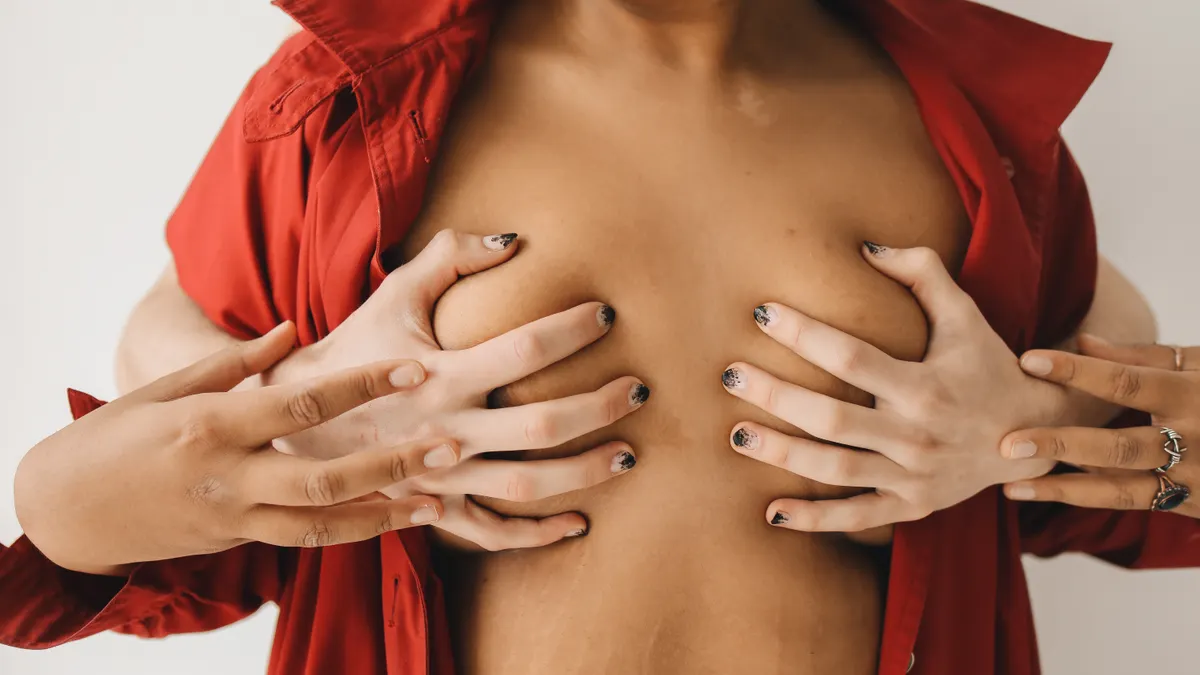
Put your thumb above the nipple and your first two fingers below it, about 2 to 3 cm back from the nipple base. The fingers should rest on the darker areola, not pinch the nipple itself. -
Press straight back toward the chest wall.
Hold that pressure for a moment without sliding the fingers across the skin. This helps move milk from the milk sinuses, which sit deeper than the nipple. -
Compress the fingers together, then release.
Gently roll the thumb and fingers toward each other, then let go. A drop or bead of milk should appear at the nipple after a few repeats. -
Repeat in a steady rhythm around the breast.
Move your fingers slightly around the areola every few compressions so different ducts are emptied. Many people do better with a slow “press, squeeze, release” rhythm than with fast pumping motions. -
Catch the milk in a spoon, syringe, or cup.
Hold the container under the nipple and let the drops fall in. A spoon is useful for a few drops of colostrum; a syringe is better when every small amount needs to be saved. -
Switch sides when the flow slows.
Move to the other breast after a few minutes or when the first side becomes soft and little milk appears. Alternating can trigger another let-down and usually feels less tiring than staying on one side too long. -
Stop when the breast feels softer, not empty.
Breast tissue is never fully drained, so the goal is comfort and useful milk removal, not a bone-dry finish. If the breast still feels full but no milk comes after several minutes, reposition your fingers instead of pressing harder.
A good sign that the method is working is a change from no visible milk to drops, then small streams, then a lighter, softer breast. If nothing appears after 5 to 10 minutes, the hand position is usually off, the breast needs more warmth, or the tissue is too tense for the first try.
How to collect colostrum in a spoon or syringe
Colostrum is easiest to collect one drop at a time, and a spoon or syringe makes that job much less frustrating than a bottle. Because colostrum is thick and usually available in tiny amounts, the priority is catching each drop without losing it to the sides of a container.
Hold the spoon just under the nipple and tilt it slightly so the drops collect at one end. If you are using a syringe, let the milk run into the tip and draw it up carefully if the syringe design allows that. A 1 mL or 5 mL syringe is often easier to manage than a larger one when the goal is to save a few milliliters at a time.
A practical trick is to express for 1 to 2 minutes, transfer the milk, then return to the breast. That pattern often works better than trying to hold a tiny container under the nipple for a long stretch. If the milk clings to the spoon, a quick tilt into the syringe or storage cup keeps it from sticking to the metal or plastic.
This method is especially useful when a baby is sleepy, a newborn is learning to feed, or the amount is too small to justify turning on a pump. The trade-off is speed: collecting colostrum by hand is slower, but it wastes less. If you are trying to build a freezer stash, this is not usually the fastest tool; if you need a few valuable drops, it is often the most practical one.
Hand expression before pumping: when it helps and when it does not
Hand expression before pumping can make pumping more comfortable and can help milk start flowing faster. It is most useful when the breast is very full, the nipple area is firm, or the flange feels uncomfortable at the start.
A short session of 1 to 2 minutes can soften the breast enough for the pump to seal better and can trigger let-down before suction begins. That matters because a rigid breast often makes pump use awkward and can reduce comfort. If the breast is less tense, the flange may sit more evenly and milk may move sooner.
This approach is not always necessary. If pumping is already comfortable and milk is flowing well, adding hand expression may not change much. It is also not the right answer if the breast hurts sharply with finger pressure, if the skin is cracked, or if the person is already too sore to tolerate more handling. In that case, gentler pumping settings or a brief pause may be a better fit.
The main advantage is control. Hand expression lets you adjust pressure instantly, which is useful when you want to soften only one area before putting on a pump. The main drawback is that it takes practice. The first few times, the motion may feel awkward and slow, and the milk may not appear right away. That is normal; the method usually becomes easier once the hand position is consistent.
How long to express and how to know when to stop
Hand expression usually lasts 5 to 10 minutes total, though some sessions are shorter and some take longer. The right stopping point is when milk flow slows, the breast feels softer, or you have collected the amount you need.
If the goal is comfort, stop as soon as the breast feels less tight. If the goal is collecting milk for feeding, stay with each side long enough to get the first let-down and then a second one if it comes. Many people do well with 3 to 5 minutes per breast and then another pass if the milk picks up again.
A session is likely finished when repeated compressions produce only a few scattered drops and the breast no longer feels heavy. There is no need to chase every last drop. Overworking the breast can leave the skin tender and make the next session less pleasant.
The honest limitation is that hand expression is not the fastest method for large volumes. It can be a strong choice for colostrum, brief relief, or getting milk started before a pump, but it is not ideal for someone who needs to remove ounces on a tight schedule every day. For that kind of routine, another feeding plan may be more practical.
Common mistakes that make hand expression harder
The most common mistake is pinching the nipple itself, which hurts and usually blocks flow. The fix is to move the fingers back onto the areola, about 2 to 3 cm from the nipple base, and press toward the chest wall before squeezing.
A second mistake is sliding the fingers over the skin instead of pressing and releasing in place. That creates friction and can irritate the breast without moving much milk. Keep the fingers steady, then move them around the areola in small steps after several compressions.
A third mistake is squeezing too hard. Force does not equal better drainage here. Hard pressure can flatten the tissue, sting, and still fail to produce milk because the ducts need a compress-and-release motion, not a clamp.
A fourth mistake is stopping after 30 seconds because nothing happened. Milk often takes a minute or two to appear, especially when the breast is full but tense. Warmth, massage, and a calm rhythm usually work better than speed.
If the breast becomes more painful rather than less, or if one area stays hard after several sessions, hand expression may not be enough on its own. That is a point to ask a lactation consultant or clinician for help, especially if there is a fever, a red wedge-shaped area, or increasing swelling.
Who hand expression is best for, and who should skip it for now
Hand expression is best for someone who wants a low-cost, no-equipment method for small amounts of milk or brief relief. It is especially useful for colostrum collection, for a baby who needs a few milliliters, for engorgement comfort, and for starting milk flow before a pump session.
It is not the best choice for someone who needs to remove a large volume quickly, who gets sharp pain from breast handling, or who cannot comfortably use their hands for several minutes. In those cases, a different approach may be simpler and less frustrating. Hand expression also has a learning curve, so if the milk is not appearing after a few careful tries, the technique may need adjustment rather than more force.
One reliable sign that the method fits your situation is that you can get a few drops, then a small flow, without making the breast more sore. One sign it does not fit is repeated pain with no milk output after 5 to 10 minutes. If that happens, it is reasonable to pause and ask for hands-on instruction from a lactation professional.
Is hand expression better than pumping?
Hand expression is better than pumping in some situations and worse in others. It is often better for colostrum, for brief relief, and for times when a pump is unavailable or uncomfortable. Pumping is usually better when you need larger volumes or a routine schedule. The right choice depends on the goal, the amount needed, and how the breast feels.
Can hand expression help with engorgement?
Hand expression can help with engorgement by softening the breast and reducing pressure. A short session often makes the breast feel less tight and can help a baby latch more easily. It should feel like relief, not punishment. If the breast is red, very painful, or the person has fever, medical evaluation is wise.
How do you hand express colostrum?
Hand express colostrum by warming the breast, placing your fingers 2 to 3 cm behind the nipple, pressing back, and squeezing gently until drops appear. Colostrum often comes in tiny amounts, so a spoon or 1 mL to 5 mL syringe works well for collection. Slow, careful repetition is more effective than force.
Drafted with AI; not yet reviewed by a person.