
Last updated: November 18, 2026
Quick Answer: In breastfeeding in special situations, the feeding method often changes fast, but the goal is usually still human milk or safe milk feeding. A baby may need pumped milk, a nipple shield, expressed colostrum, or a temporary supplement plan, and in many cases the first 24 to 72 hours decide how quickly the plan has to change. The sections below sort out what changes, what usually stays the same, and when to get extra help.
Breastfeeding in special situations gets harder when the baby is premature, sick, separated from you, or born with a cleft lip or palate. You can often still breastfeed or give human milk, but the feeding plan has to match the medical situation. The sections below sort out what changes, what usually stays the same, and when to get extra help. This guide on Breastfeeding in special situations — The Complete Guide keeps the focus on practical choices, not perfection.
I write on infant feeding and lactation care for families who need plain answers, not cheerleading.
Key Takeaways
- Special situations change the method, not always the goal.
- A baby may need pumped milk, a nipple shield, expressed colostrum, or a temporary supplement plan.
- Some conditions need faster action than others, especially prematurity, jaundice, and severe illness.
- Medication questions should be checked against a reliable source, not guessed.
- If feeding hurts, the latch is bad, or the baby is not gaining, the plan needs review.
What changes in special situations?
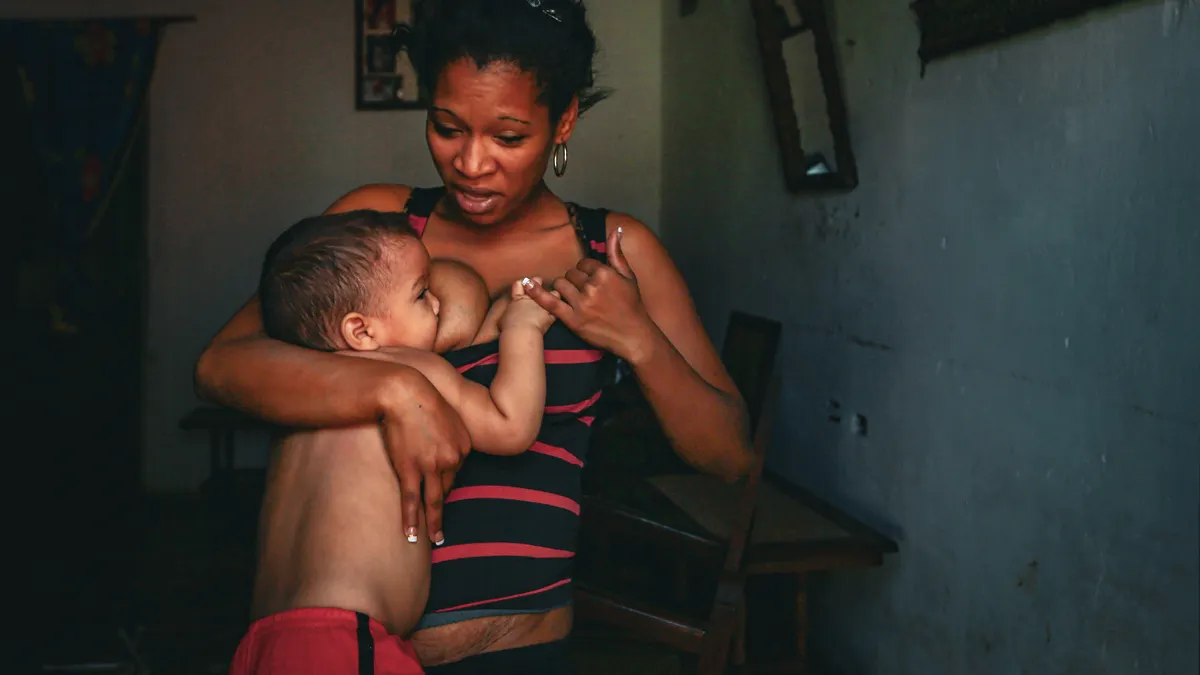
Breastfeeding in special situations means the same basic skill set gets adjusted for a different body, a different baby, or a different medical risk. The milk may still be the best first food, but the way it reaches the baby can change fast.
For example, you may have birth complications, your baby may be in a nursery, or your nipples may be too sore to keep nursing comfortably. The goal is still milk feeding, but the path may include pumping, cup feeding, a shield, or temporary supplementation.
Here’s the catch: many generic breastfeeding guides assume a healthy term baby who roomed in with you from the start. That misses the cases that create the most panic. If the baby is preterm, has hypoglycemia, or has a cleft, the usual advice can be too slow or too vague.
The best starting point is not “Can I breastfeed perfectly?” It’s “What is safest and most effective right now?” That answer depends on latch, milk transfer, baby’s weight, gestational age, and any medication or surgery involved. For medication checks, the NIH LactMed database is a trusted place to start.
Can I breastfeed if my baby is premature?
Yes, you can often provide breast milk for a premature baby, but the baby may not be able to nurse well at first. Premature infants often need expressed milk, tube feeds, or very short nursing sessions until they can coordinate suck, swallow, and breathe.
Your baby may be in the NICU, and your milk supply may be just beginning. You want to help, but direct nursing is not always possible on day one, and that does not mean breastfeeding has failed.
The priority is human milk as early as possible, because preterm babies are more vulnerable to infection and feeding fatigue. In many units, the plan starts with pumping, skin-to-skin contact, and gradual practice at the breast when the baby is stable. The American Academy of Pediatrics has long supported human milk for preterm infants, and many NICUs use milk-first protocols for this reason.
What usually helps most:
- Begin pumping early and often if direct nursing is not effective yet.
- Ask for paced, developmentally gentle feeds if the baby takes milk by mouth.
- Use skin-to-skin time to improve milk supply and feeding readiness.
- Expect tiny progress: one good latch attempt is still progress.
What gets missed in generic advice:
- A preterm baby may tire before finishing a feed.
- Suck strength can change day to day.
- Weight checks matter more than “looks satisfied” guesses.
- Fortification may be needed in some NICU plans, which changes the feeding strategy.
A premature baby can absolutely end up breastfeeding well later. The first phase often looks more like milk management than nursing. That is normal.
What if I’m breastfeeding after a C-section or difficult birth?

Yes, you can breastfeed after a C-section or complicated delivery, but the first hours may be slower and more painful. Positioning, incision pain, and fatigue can make the early latch harder than expected.
Your body may be sore, sleepy, and trying to hold a baby against an incision that protests every time you move. The job is not to force a picture-perfect cradle hold; the job is to find a position that doesn’t make you brace.
The first hours matter because early milk removal helps establish supply. If direct nursing is too painful, hand expression or pumping can protect milk production until nursing gets easier. Many hospitals encourage side-lying or football holds because they reduce pressure on the abdomen.
A few practical points:
- The baby may need help staying awake long enough to feed.
- Swelling from IV fluids can make latch harder for a day or two.
- Pain control affects feeding. If pain is unmanaged, nursing often suffers.
- Ask for help with positioning before the baby gets frantic.
What a generic article often leaves out is that “just keep trying” can backfire when the parent is exhausted and the baby is hungry. If latch attempts keep failing, a short pumping session and a calmer retry can work better than repeated wrestling at the breast.
How do I breastfeed a baby with jaundice or low blood sugar?
Yes, breastfeeding usually continues, but these babies often need faster, more structured feeding. Jaundice and low blood sugar can make a baby sleepy and less eager to nurse, which creates a cycle: less feeding leads to worse symptoms.
Your baby may keep falling asleep at the breast, and the nurses may keep talking about bilirubin or glucose checks. That is not the time for vague reassurance. It is the time for a clear feeding schedule and close follow-up.
The reason is simple. A sleepy baby may not transfer enough milk, and less intake can make jaundice or hypoglycemia harder to correct. Frequent feeds, skin-to-skin care, and lactation support are common parts of the plan. If intake stays low, expressed milk or temporary supplementation may be needed while the cause is addressed.
What helps in practice:
- Wake the baby for feeds if the care team has told you to do so.
- Use both breasts and offer breast compressions if the baby is sleepy.
- Pump after nursing if milk transfer is poor.
- Follow the baby’s bilirubin or glucose plan exactly as given.
The Centers for Disease Control and Prevention and many hospital protocols emphasize frequent feeding support in the early days because intake matters. Here’s the catch: a baby who is too sleepy to latch may need medical attention, not just a more patient parent.
Can I breastfeed if I’m taking medication or have an illness?
Often yes, but the medication name matters, and some infections change the plan for a short time. A blanket “safe” or “unsafe” answer is not good enough.
You may need antibiotics, blood pressure medicine, or treatment for a new diagnosis, and a vague yes or no about breastfeeding is not enough. That kind of answer is useless because compatibility depends on the specific drug, dose, and timing, so consult a clinician or pharmacist and check a reliable source.
The best move is to check a reliable lactation reference before stopping breastfeeding on impulse. The NIH LactMed database lists many medicines and gives human milk transfer information, infant effects, and alternatives. For many common drugs, breastfeeding can continue with little or no change.
What this section means in real life:
- Not every medicine that reaches milk harms the baby.
- Timing the dose after a feed sometimes reduces exposure.
- Some drugs are compatible only with monitoring.
- Some illnesses, like untreated active infections or certain procedures, may need short-term changes.
A real drawback of generic online advice is that it often treats all medications as equal. They are not. A small transfer into milk can matter for one drug and be trivial for another. If you do not know the exact name, you do not have enough information yet.
What if my baby has a cleft lip, cleft palate, or oral difference?
Breastfeeding may still be possible, but the feeding method often needs modification. A cleft lip alone is sometimes manageable at the breast; a cleft palate usually makes direct suction much harder.
Your baby may try hard but cannot hold a seal, milk may leak, and feeds may take forever. That is not a behavior problem. It is a mechanics problem.
The main issue is suction. Babies with a cleft palate often cannot create the negative pressure needed for efficient milk transfer, so they may need expressed breast milk by a special bottle, cup, or other feeding method. Some babies with a cleft lip can nurse well if the cleft is small and latch is supported.
What matters most:
- The feeding plan should protect growth and reduce fatigue.
- Lactation help should be paired with cleft-team guidance when possible.
- Weight gain matters more than the label “breastfed” or “not breastfed.”
- Some babies do better at the breast for comfort and at the bottle for volume.
One useful habit is to think in terms of human milk first, method second. That keeps the focus on the baby’s nutrition instead of on a single feeding image. The CDC’s breastfeeding and special circumstances resources are a solid starting point for this kind of situation.
The honest side-by-side: direct nursing, pumping, and mixed feeding
Direct nursing wins when the baby can latch, transfer milk, and keep up at the breast. Pumping wins when the baby cannot do that yet, and mixed feeding wins when the baby needs both human milk and another method for a while.
You may be trying to decide whether to keep nursing, switch to pumping, or do both. The right choice is the one that keeps milk moving and keeps the baby fed. Sentiment does not feed a newborn.
| Criteria | Direct nursing | Pumping / expressed milk | Winner for this condition |
|---|---|---|---|
| Baby can stay awake for a full feed | Better if latch and stamina are good | Useful if baby tires fast | Pumping when fatigue is the barrier |
| Prematurity or NICU stay | Often too early at first | Usually the practical first step | Pumping |
| Maternal nipple pain or trauma | Can worsen pain if latch is poor | Gives nipples time to heal | Pumping |
| Need to know exact intake | Hard to measure precisely | Easier to track volume | Pumping |
| Want to keep breastfeeding relationship | Strongest direct contact | Still helps supply and transition | Direct nursing |
| Cleft palate or weak suction | Often inefficient | More reliable milk delivery | Pumping |
| Supply building in the early days | Good if milk transfer is effective | Good if pumping is frequent | Tie |
| Family support and time at home | Easier when baby feeds well | More work with cleaning and scheduling | Direct nursing |
| Temporary medical separation | Not possible in the moment | Keeps supply going | Pumping |
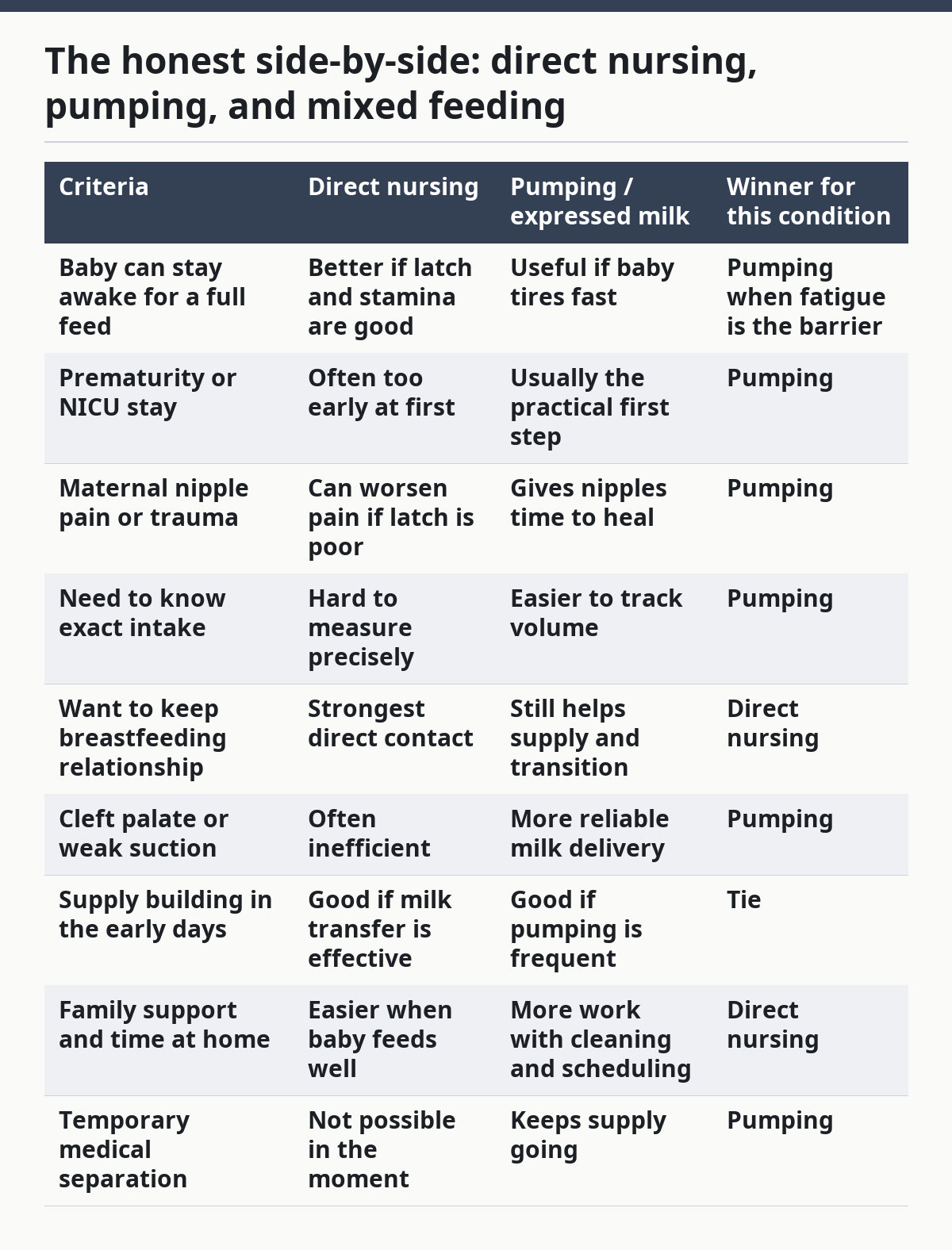
The truth is, mixed feeding is often the bridge, not the failure. A baby may nurse for comfort and practice, then get expressed milk for the rest of the feed. That is still a breastfeeding plan.
What are the situations where breastfeeding should be reconsidered?
Breastfeeding should be reconsidered temporarily when the baby is too sick to feed safely, the parent is too unwell to hold the baby, or milk transfer is clearly not enough and weight is dropping.
The baby may be lethargic, feeds may be short, and diaper counts may be poor. This is not the moment to push through and hope for the best. It is the moment to stop guessing and get the plan checked.
These are the main exception scenarios:
- Severe infant illness. If the baby has breathing trouble, extreme sleepiness, or a medical issue that affects safe swallowing, direct feeds may need to pause.
- Documented poor transfer. If the baby cannot remove milk well, nursing alone may not be enough.
- Parent illness or treatment limits. Some medical treatments make contact or feeding temporarily harder.
- Rapid weight loss or dehydration signs. Breastfeeding support should not become a reason to delay needed care.
The consequence of waiting too long is simple: a fixable feeding problem turns into a bigger medical problem. That is why special situations deserve a low threshold for help. The WHO breastfeeding guidance also stresses support, monitoring, and practical feeding help, not guilt.
How do I know the feeding plan is working?
The plan is working if the baby is feeding with less struggle, diaper output is appropriate for age, and weight is tracked well enough to catch problems early. A plan that looks good on paper but leaves the baby sleepy, thirsty, or frustrated is not working.
You may have switched to a shield, pumping, or mixed feeds, and now you want proof that it is enough. The answer comes from the baby’s pattern, not from one good feed.
Look for these signs:
- The baby feeds with less effort over time.
- The baby seems more settled after feeds, though not every baby acts sleepy afterward.
- Wet and dirty diapers are being tracked by the care team.
- Weight checks show the baby is following the expected curve.
- You are not dreading every feed because of pain or chaos.
What can go wrong:
- A baby may look calm but still take too little milk.
- Long feeds do not always mean good transfer.
- Oversupply can look like “plenty of milk” while the baby still feeds badly.
- Supplementation can help, but it should be reviewed so supply does not quietly drop.
If the plan needs frequent correction, that is not a sign of failure. It is a sign that the situation is medically real. In special situations, reassessment is part of the job.
The verdict: which approach fits which family?
Choose direct nursing if the baby can latch, transfer milk, and stay safe at the breast. Choose pumping and expressed milk if the baby is premature, separated from you, too sleepy, or unable to create a strong suck. Neither if the baby is breathing badly, too lethargic to feed, or losing weight in a way that needs urgent medical review.
You may want one clean answer, not a maze of possibilities. The clean answer is this — match the method to the baby’s current ability, not to the ideal version of feeding in your head.
Direct nursing is the best fit when the baby is medically stable and the latch is functional. Pumping becomes the better tool when the baby cannot yet manage direct feeds, or when milk supply needs protection during a hard start. Mixed feeding is not a compromise to apologize for; it is often the smartest temporary plan.
The mistake is treating every special situation as if persistence alone will solve it. Some will improve with time. Some need a new method today.
FAQ
Can I breastfeed my preterm baby right away?
Yes, sometimes, but many preterm babies start with expressed milk, tube feeds, or very brief nursing practice. The baby’s breathing, stamina, and coordination decide the pace. A NICU or lactation team usually helps set the first steps.
What if my baby keeps falling asleep at the breast?
A sleepy baby may need more frequent waking, better positioning, breast compressions, or expressed milk. If sleepiness is extreme or the baby feeds poorly over and over, the feeding plan needs medical review. Don’t wait for “one more day” if intake is clearly low.
Is it okay to breastfeed while taking medicine?
Often yes, but the exact drug matters. LactMed from the NIH is a reliable place to check, and the prescribing clinician should know you are breastfeeding. Never stop a medicine blindly, and never assume a drug is safe just because it is common.
Can a baby with a cleft palate breastfeed?
Sometimes, but a cleft palate often makes suction too weak for efficient nursing. Many babies do better with expressed breast milk and a special feeding method. A cleft team and lactation support can help decide whether direct nursing is worth continuing for practice or comfort.
When should I ask for help?
Ask quickly if the baby is not gaining, feeds are very painful, diaper output is poor, or the baby has a medical condition that affects feeding. Special situations move faster than standard breastfeeding advice. The earlier the problem is checked, the easier it is to fix.
Drafted with AI; not yet reviewed by a person.