
Last updated: November 19, 2026
Key Takeaways
- Reflux feeding management means making small, repeatable feed changes so less milk comes back up and less air gets swallowed.
- You can breastfeed a refluxy baby by slowing flow, keeping the baby upright, and ending before the stomach gets overfilled.
- Helpful positions keep the baby’s head above the stomach and reduce a fast milk rush.
- A strong let-down is often managed by softening the first burst, then latching once the flow settles.
Breastfeeding a baby with reflux or frequent spit-up can feel messy and discouraging. How to breastfeed with baby reflux or frequent spit-up usually depends on how you feed, not whether you breastfeed. The steps below show how to use upright positioning, calmer milk flow, burping, and post-feed holding to make feeds easier.
What reflux feeding management means for breastfeeding
Reflux feeding management means making small, repeatable changes to the feed so milk stays down more often and your baby swallows less air. It does not mean stopping breastfeeding or switching directions every feed like a guessing game.
Picture this: you’re starting a feed, your baby gulps hard, pulls off, and spits up half an hour later. You need a plan that changes the mechanics of the feed, not just your worry level. That starts with upright feeding, paced timing, and burping.
The truth is, many babies spit up because their stomach valve is immature, not because breast milk is “too much.” Breastfeeding often still works well here, especially when you reduce fast let-down and keep the baby more vertical during and after feeds.
A simple way to think about it:
- Feed in a more upright hold than flat-on-the-back nursing.
- Watch for a forceful let-down and slow it if needed.
- Burp more often, not just at the end.
- Keep the baby upright after the feed for a short stretch.
That’s the core of reflux feeding management. The rest is timing and pattern.
How to breastfeed with baby reflux or frequent spit-up
You can breastfeed a refluxy baby by slowing the flow, keeping the baby upright, and stopping the feed before the stomach gets overfilled. That usually helps more than trying to “push through” a long, rushed nursing session.
Picture this: you’re feeding on a couch, the baby keeps popping off, and milk is running fast. You don’t need a dramatic reset. You need a calmer setup, a better angle, and a shorter path from breast to stomach. Position beats panic.
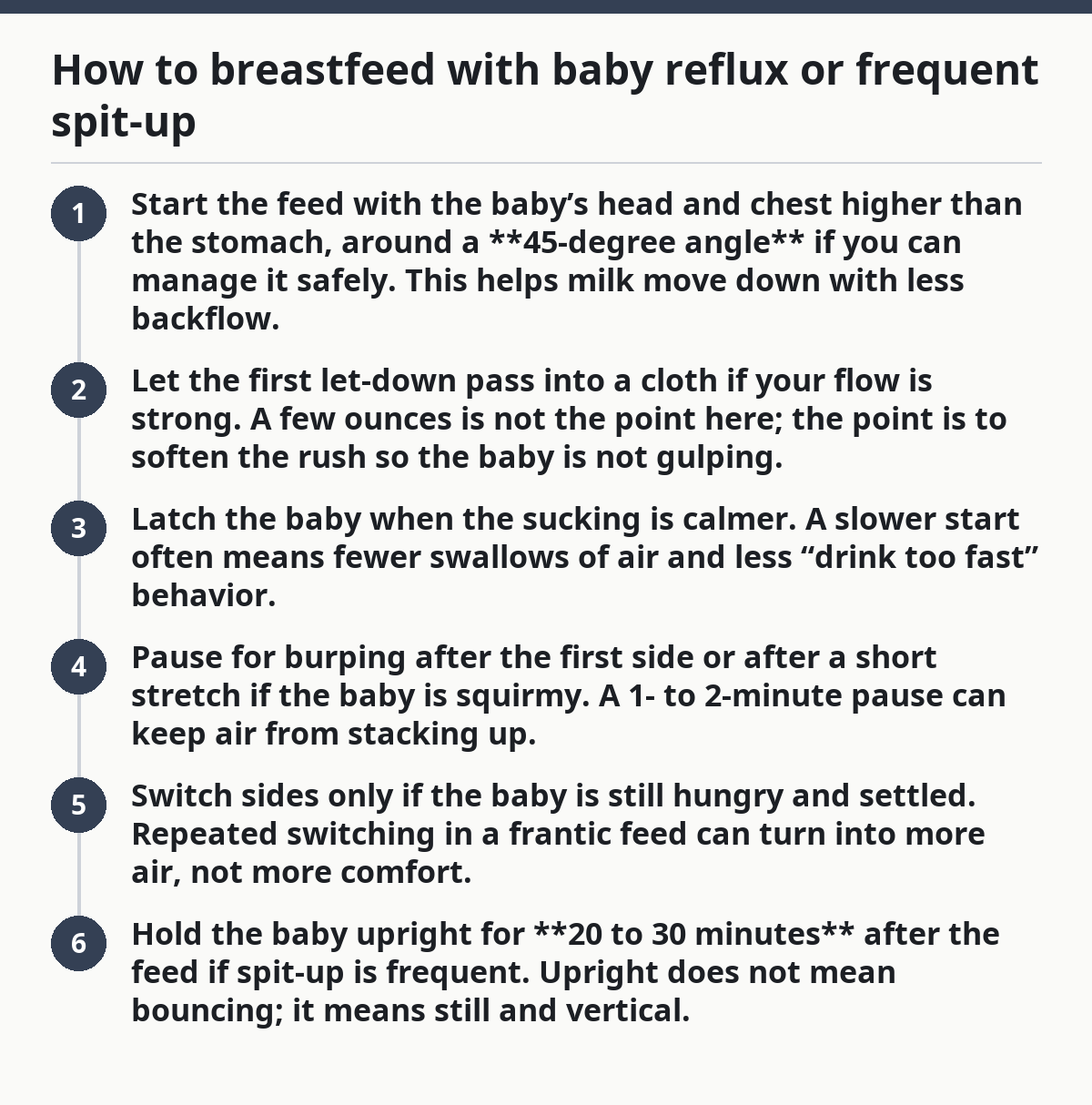
Use this core routine:
- Start the feed with the baby’s head and chest higher than the stomach, around a **45-degree angle** if you can manage it safely. This helps milk move down with less backflow.
- Let the first let-down pass into a cloth if your flow is strong. A few ounces is not the point here; the point is to soften the rush so the baby is not gulping.
- Latch the baby when the sucking is calmer. A slower start often means fewer swallows of air and less “drink too fast” behavior.
- Pause for burping after the first side or after a short stretch if the baby is squirmy. A 1- to 2-minute pause can keep air from stacking up.
- Switch sides only if the baby is still hungry and settled. Repeated switching in a frantic feed can turn into more air, not more comfort.
- Hold the baby upright for **20 to 30 minutes** after the feed if spit-up is frequent. Upright does not mean bouncing; it means still and vertical.
The goal is a feed that looks boring. Less gulping. Less coughing. Less milk coming back up. If the baby is arching hard, choking often, or refuses most feeds, that needs a separate conversation with a clinician.
Which nursing positions help a reflux baby most?
The best positions are the ones that keep the baby’s head above the stomach and reduce a fast milk rush. That usually means a more upright hold, not a flat cradle with the baby lying back.
Picture this: you’re trying to nurse while the baby keeps sputtering and swallowing air. A position that looked fine with an easy feeder may be wrong for this baby. A slight incline can change the whole feed.
These positions usually help most:
- Koala-style or straddle hold: baby sits more upright against your body.
- Laid-back nursing: your recline slows milk flow when let-down is strong.
- Cross-cradle with tilt: useful if you need more control of the latch while keeping the baby angled up.
A few position mistakes cost you:
- A flat baby can make spit-up worse because milk pools more easily.
- A baby too low on the breast may gulp harder to keep up.
- Too much neck bend can make swallowing look messy and tiring.
The best fit depends on the problem:
- If your let-down is forceful, try laid-back nursing first.
- If the baby needs more support, try a straddle or upright hold.
- If latch control is the issue, cross-cradle with a slight incline can help.
This is one place where a generic “try different positions” article gets lazy. The position has to match the problem. Upright holds help gravity. Laid-back nursing helps a fast let-down. Those are not the same fix.
How do I handle a strong let-down without stopping breastfeeding?
You handle a strong let-down by taking the edge off the first burst, then latching when the flow is calmer. A baby who chokes, coughs, or pulls off at the start is often dealing with flow, not refusal.
Picture this: the baby latches, then sputters within seconds. That usually points to let-down, not bad behavior. The answer is to soften the first surge before the baby has to manage it.
Try these adjustments:
- Start in a laid-back position so gravity slows the initial rush.
- Hand express briefly before latching if the breast feels very full.
- Catch the first spray in a cloth if milk sprays hard at let-down.
- Unlatch and relatch after the first burst if the baby is coughing.
- Offer the second side only after the baby settles, not while still frantic.
A few things make this worse:
- Pumping right before every feed can sometimes increase oversupply issues.
- Switching sides too fast can keep the baby in a start-stop pattern.
- A shallow, messy latch can make fast flow feel even faster.
You do not need a perfect session. You need a calmer first minute. That one minute often decides whether the feed feels easy or chaotic.
If the baby seems overwhelmed at almost every feed, this is worth discussing with a lactation professional who can look at flow, positioning, and transfer together. That is different from assuming the breast milk itself is the problem.
Burping and post-feed holding that actually help
Burping and upright holding help best when you use them early and gently, not as a punishment at the end of a fight. A baby with reflux often needs air released before the stomach is overfull.
Picture this: the feed is done, but the baby is still squirming and hiccupping. This is the moment for a calm reset, not a bounce, twist, or hurried diaper change. Stillness helps more than motion.
Use these habits:
- Burp once during the feed if the baby is gulping or popping off.
- Burp again after the feed if the baby seems tight or unsettled.
- Hold upright for 20 to 30 minutes after feeding.
- Keep pressure off the belly. A tight waistband or curled position can make spit-up more likely.
Burping styles vary, but the aim is the same:
- Over-the-shoulder support can work if the head is steady.
- Sitting upright on your lap can help if the baby dislikes pressure on the chest.
- A gentle forward lean may release air without a lot of patting.
The common mistake is thinking more burping always equals better burping. Too much jostling can irritate a baby who already has reflux-like symptoms. One or two calm attempts are better than five minutes of bouncing.
On the flip side, skipping burps entirely can leave air trapped, which makes the next spit-up more likely. That trade-off matters. Air and milk are a bad mix in a small stomach.
Spit-up patterns: what is normal and what is not
Small spit-ups after feeds are common, but frequent forceful vomiting, poor feeding, or pain-like behavior is not something to brush off. The pattern matters more than the one messy bib.
Picture this: you’re washing the same onesie again, and you’re trying to decide if this is just baby life or a bigger problem. You are looking for the shape of the problem, not a single spill. Pattern beats panic.
Here’s how to read the pattern:
- Mild spit-up: a little milk comes up, the baby stays comfortable, and feeding continues.
- Frequent spit-up with fussiness: the baby may be swallowing air, overfilling, or reacting to fast flow.
- Projectile vomiting or green vomit: that is not a breastfeeding tweak situation.
- Poor weight gain, fewer wet diapers, or pain during feeds: that needs prompt medical attention.
Do not chase every spit-up with a new fix. A baby who is otherwise relaxed may only need positioning and time. A baby who arches, cries hard, or refuses feeds is telling you the issue is bigger than clean clothes.
This page is about breastfeeding adjustments, not a full reflux workup. If you want the broader breastfeeding troubleshooting map, the hub on breastfeeding problems and troubleshooting is the right next stop.
What a lot of parents do wrong with reflux feeds
A lot of parents try to make the baby feed longer, flatter, or faster, and that often backfires. The fix is usually calmer mechanics, not more force.
Picture this: you’re trying every trick you can think of, but the spit-up keeps coming. That’s when bad habits sneak in. They feel productive. They usually aren’t. Shorter and calmer can work better.
Common mistakes and what they cost:
- Feeding flat: milk pools more easily and the baby may spit up sooner.
- Chasing a long feed: a tired baby swallows more air and gets less efficient.
- Overhandling after feeds: too much bouncing or tummy pressure can trigger more spit-up.
- Ignoring the let-down: if the first rush is strong, the baby may keep fighting the feed.
What to do instead:
- Keep the baby more upright from the start.
- Pause when the baby coughs or pulls off.
- Use burping as a tool, not a test.
- Keep the post-feed hold quiet and still.
A healthy feeding plan for reflux is not fancy. It is repetitive. Same angle. Same calm start. Same upright hold after. That consistency matters more than trying a new trick every day.
FAQ
Does reflux affect breastfeeding?
Yes, reflux can make breastfeeding feel harder even when breastfeeding is still the right fit. The baby may unlatch, cough, spit up more often, or seem upset after feeds. That usually calls for changes in position, let-down management, and post-feed holding, not an automatic stop to breastfeeding.
Should I change positions for a reflux baby?
Yes, position changes are often one of the first things to try. Upright holds and laid-back nursing can both help, depending on whether the bigger issue is gravity or a fast let-down. The right position is the one that keeps the baby calmer and reduces coughing or gulping.
When is spit-up not normal?
Spit-up is not normal when it is forceful, green, bloody, or paired with poor feeding, fewer wet diapers, or clear pain. A baby who is not gaining well or who vomits repeatedly after most feeds needs prompt medical review. Spit-up alone is common; spit-up with distress is different.
Should I keep breastfeeding if my baby spits up a lot?
Yes, many babies who spit up a lot can still breastfeed well with adjustments. The key is to reduce fast flow, burp during and after feeds, and hold the baby upright afterward. If the pattern is severe or the baby seems unwell, get clinical help rather than guessing.
Drafted with AI; not yet reviewed by a person.