
Last updated: November 19, 2026
Key Takeaways
- Combo feeding gives breast milk and formula together in one feeding plan.
- Breastfeed and use formula in the same day by keeping the order, amount, and bottle method steady.
- Bottle first can fit some special situations, but it may reduce time at the breast.
- A bottle works best with breastfeeding when it is calm, slow, and familiar.
Breastfeeding and formula can work together in one combo feeding plan if you keep feeds calm, watch your baby’s cues, and speak with a qualified professional about your own situation. This article explains how to breastfeed and supplement with formula safely in a way that fits your feeding plan. A safe plan is usually steady, not perfect.
The steps below explain what to keep consistent, what can vary, and where families usually trip up.
What combo feeding means, and who it fits

Combo feeding means your baby gets breast milk and formula in the same overall feeding plan. It fits families who need extra milk, want another caregiver to help with feeds, or need a practical bridge while breastfeeding is getting established.
Picture this: you’re tired, your baby still seems hungry after nursing, and you need a plan that doesn’t turn every feed into a guessing game. A good combo feeding plan uses a bottle, breast milk, formula, and a repeatable routine so the day feels steadier.
Common reasons include:
- a parent’s milk supply is still building
- a caregiver needs to give a feed while you rest or return to work
- the baby is premature or has special feeding needs and a clinician has suggested supplementing
- breastfeeding feels painful and a temporary mix is easier while you get help
Not every reason means the same approach. Here’s the catch: if the baby is sleepy, not feeding well, or has medical concerns, the feeding plan should come from a qualified professional rather than trial and error.
For general breastfeeding guidance, the American Academy of Pediatrics and the CDC both have practical parent resources on breastfeeding and infant feeding:
- CDC breastfeeding basics: https://www.cdc.gov/breastfeeding/
- American Academy of Pediatrics breastfeeding resources: https://www.healthychildren.org/
How do I breastfeed and use formula in the same day?
You can breastfeed and use formula in the same day by keeping the order, the amount, and the bottle method as steady as possible. A predictable rhythm helps the baby learn both breast and bottle without a lot of extra fuss. The CDC recommends exclusive breastfeeding for about the first 6 months, so supplementation is usually a specific plan, not a default.
Picture this: you’re setting up the next feed at 2 a.m., and you want a plan you can repeat half-asleep. A simple 7-step routine is easier to follow than making each feed up on the spot.
- Start with the breast. Offer the breast first if breastfeeding is part of your goal. Verify that the baby latches, sucks, and swallows for a reasonable stretch. If the baby refuses both sides, goes limp, or cannot stay latched, that is a problem.
- Watch the feed, not the clock alone. Let the baby finish active swallowing, then watch for relaxed hands, slower sucking, and turning away. A feed that ends after only a minute or two of active sucking may mean the baby needs more support.
- Add formula if the plan calls for it. Prepare formula exactly as the label directs, using the correct water-to-powder ratio or ready-to-feed instructions. Verify the mix is made safely and is not over-diluted or over-concentrated. If the instructions seem unclear, pause and get help.
- Offer the bottle in a paced way. Hold the bottle more horizontally, keep pauses in the feed, and let the baby pull milk rather than pouring it in fast. A paced bottle feed usually helps prevent overfeeding and makes it easier to switch between breast and bottle.
- Use a slow-flow nipple if needed. Many families do better with a slower nipple, especially early on, because fast flow can make the bottle feel easier than the breast. If the baby coughs, gulps, or milk spills from the mouth, the flow may be too fast.
- Keep track of what was taken. Note which side was nursed first, whether formula was added, and how much was offered. A simple log helps spot patterns over 24 hours. If every feed needs more formula right away, that pattern deserves a discussion with a qualified professional.
- Protect the next breastfeed. If a bottle replaces a full nursing session, milk removal from the breast may change. Some parents pump after the missed feed, especially early on, to keep the routine closer to the breastfed pattern. If pumping is painful or nothing comes out over time, the plan may need adjusting.
A routine does not have to be perfect to be useful. It only has to be repeatable enough that your baby and your caregivers know what comes next.
Which comes first: breast or bottle?

Breast first is often the usual choice when the goal is to keep breastfeeding going, because it gives the baby a chance to nurse when they are most alert and hungry. Bottle first can make sense in some special situations, but it can also change how much time the baby spends at the breast.
Picture this: your baby is fussing, and everyone in the room has a different opinion about whether to nurse or bottle-feed first. The order matters because early hunger cues are usually easier to work with than a fully upset baby.
A practical way to think about it:
- Breast first is often used when preserving breastfeeding is the priority
- Bottle first may be used when a clinician has given a specific feeding plan, or when a baby needs a set amount quickly
- Alternate by feed if your plan needs balance and your baby tolerates change well
The truth is, the “right” order depends on the reason for supplementation. If the bottle comes first every time, some babies may nurse less vigorously or skip the breast entirely. If breastfeeding is the goal, start there unless a professional has told you otherwise.
How to offer a bottle without making breastfeeding harder
A bottle is easiest to pair with breastfeeding when it feels calm, slow, and familiar, not when it rushes milk into the baby’s mouth. The mechanics matter because the bottle can become the easier job if the flow is too fast.
Picture this: you want help from another caregiver, but you don’t want the baby to start preferring one method because it is easier. A paced bottle feed can lower that risk by keeping the bottle feed closer to a breastfeed in rhythm.
Use these habits:
- keep the baby fairly upright
- touch the nipple to the lips and wait for an open mouth
- let the nipple fill only partly with milk
- pause every so often, especially if the baby starts gulping
- stop when the baby turns away, relaxes, or stops active sucking
Common mistakes at the bottle include propping it up, tilting it too steeply, or pushing the nipple in before the baby opens wide. Those habits can encourage fast drinking and make the bottle feel very different from the breast.
On the flip side, some babies need a faster or different nipple because they tire out on a very slow flow. That is why matching the nipple to the baby matters more than following a one-size-fits-all rule.
What should stay consistent, and what can change?
The feeding plan should keep the main pattern steady while allowing the exact ounces, timing, and caregiver to change. Consistency helps the baby settle; flexibility helps the family survive the day.
Picture this: one caregiver handles a 7 a.m. feed, another takes the 3 p.m. bottle, and you nurse at night. The core pattern can stay the same even when the people and the setting change.
Keep these parts consistent:
- the usual first step, such as breast before bottle
- the bottle method, such as paced feeding
- the nipple flow, unless it is clearly not working
- the general order of feeds across the day
What can vary:
- which caregiver gives the bottle
- which bottle contains breast milk or formula
- the exact timing, within a reasonable range
- the amount of formula added when the plan allows some flexibility
If the baby suddenly needs more formula than usual, the reason matters. A one-off hungry day is different from a week-long pattern of lower breast intake, fewer wet diapers, or a baby who seems hard to wake for feeds. Those patterns need a qualified professional’s eye.
When should I stop trying the usual plan?
You should stop the usual combo feeding plan and get qualified help when feeding becomes hard, unsafe, or clearly not working. That is not a failure; it is a sign that the plan needs medical review or a different feeding approach.
Picture this: you’re trying to keep breastfeeding going, but the baby fights every feed, coughs at the bottle, or seems worse after each attempt. These are stop-and-check situations, not “push through it” moments.
Baby will not wake for feeds: this can mean feeding is no longer going well — contact a qualified professional promptly and follow their instructions.
Breathing, coughing, or choking during feeds: this can point to flow or swallowing trouble — stop the feed and seek urgent guidance.
Repeated refusal of both breast and bottle: this can mean the plan is not matching the baby’s needs — get help the same day if possible.
Painful latch that does not improve: this can make breastfeeding harder and may lead to shallow latch or cracked nipples — ask for lactation help rather than forcing longer feeds.
Formula preparation is uncertain: if the mixing directions are unclear or the water-to-powder ratio is in doubt, do not guess — use the label exactly or get clarification before feeding.
The baby seems less satisfied after many feeds: this may mean the plan is not meeting needs — a feeding review is the next step, not just more of the same.
Common mistakes parents make with combo feeding
The biggest combo feeding mistakes are usually about speed, guessing, and changing too many things at once. A small error can make breastfeeding harder to read, not just harder to do.
Picture this: one day the baby gets a fast bottle, the next day a long nursing session, and then someone changes nipples and timing too. That kind of whiplash can make it impossible to see what is helping.
Here are the mistakes that show up most often:
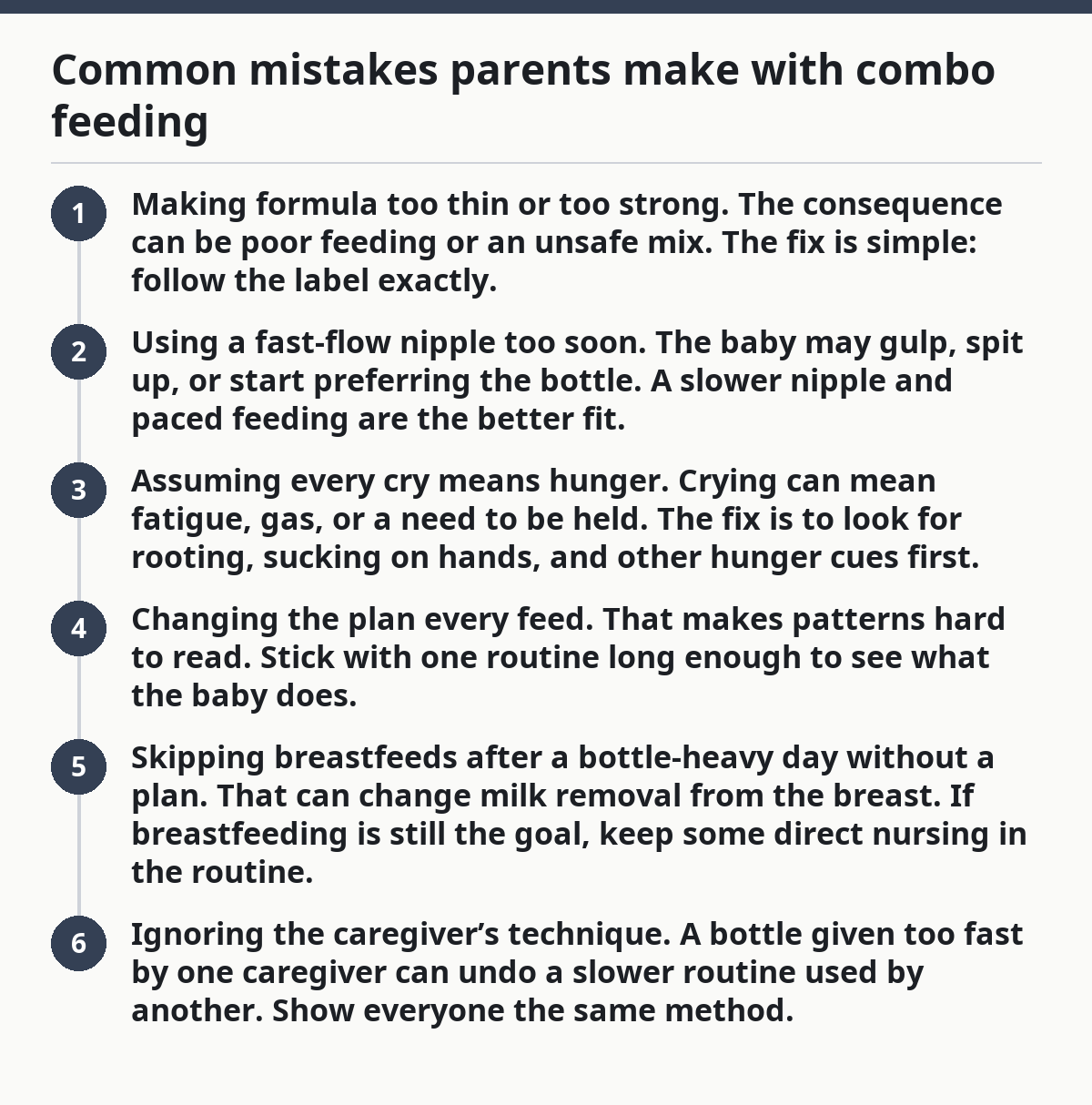
- Making formula too thin or too strong. The consequence can be poor feeding or an unsafe mix. The fix is simple: follow the label exactly.
- Using a fast-flow nipple too soon. The baby may gulp, spit up, or start preferring the bottle. A slower nipple and paced feeding are the better fit.
- Assuming every cry means hunger. Crying can mean fatigue, gas, or a need to be held. The fix is to look for rooting, sucking on hands, and other hunger cues first.
- Changing the plan every feed. That makes patterns hard to read. Stick with one routine long enough to see what the baby does.
- Skipping breastfeeds after a bottle-heavy day without a plan. That can change milk removal from the breast. If breastfeeding is still the goal, keep some direct nursing in the routine.
- Ignoring the caregiver’s technique. A bottle given too fast by one caregiver can undo a slower routine used by another. Show everyone the same method.
The right alternative is not perfection. It is a clear feeding plan that every caregiver can follow for the same baby.
What changes for premature babies or special feeding plans?
Premature babies and babies with medical needs may need a more specific feeding plan than a healthy full-term baby. Their suck, swallow, and breathing coordination can differ, so the usual advice may not fit well.
Picture this: the baby gets tired halfway through a feed, or the nurse says the feeding plan needs to be more structured. That is a different job than casual supplementation at home.
In these cases, the plan may include:
- smaller, more frequent feeds
- a specific order of breast, expressed breast milk, and formula
- a certain nipple flow or bottle type
- closer follow-up from a neonatal or feeding specialist
Do not improvise if the baby has been born early, has trouble gaining weight, has a heart or swallowing issue, or has been told to follow a special feeding plan. The detail in those plans matters more than any general breastfeeding article.
FAQ
Can I breastfeed and use formula?
Yes, many families do both in one feeding plan. The key is to make the routine predictable enough that breastfeeding still has a place in the day, while formula fills the gap when needed.
How do I supplement without stopping breastfeeding?
Start with breastfeeding when that matches your plan, then add formula only as needed and use paced bottle feeding. If a bottle replaces a full nursing session, some parents also remove milk in another way to keep the breast routine more similar.
Should I breastfeed or bottle feed first?
Breast first is often used when you want to keep breastfeeding going, because a hungry baby may nurse more readily at the start of a feed. Bottle first can fit special plans, but if breastfeeding matters to you, that choice should be tied to a clear reason rather than habit alone.
Drafted with AI; not yet reviewed by a person.