
Last updated: November 26, 2026
Quick answer: most premature babies do best with 2 to 3 short latch attempts, started at early feeding cues, with extra breast support and a calm reset if the latch stays shallow. How to Get a Premature Baby to Latch is usually about timing, breast shape, and stopping before fatigue takes over. If latching stays painful or chaotic, consult a lactation consultant or pediatric clinician; the Academy of Breastfeeding Medicine recommends individualized support for late preterm and early term infants, and the CDC also advises getting help when breastfeeding is not going well. The goal is not to force a full feed on the first try. The goal is to help the baby open wide, take enough breast into the mouth for a deep latch, and stay organized long enough to drink.
Key takeaways
- Start when the baby shows early feeding cues, not after crying starts.
- Shape the breast so a small mouth can take more of the areola, not just the nipple.
- Keep the first tries brief, because fatigue can unravel a latch fast in a premature baby.
- A nipple shield can help some babies, but it is not the default fix for every preemie.
- If the latch stays shallow, painful, or chaotic, pause and try again rather than drilling through it.
What is the first thing to do?
The first thing to do is wait for an early cue, then bring the breast to the baby before the baby gets too tired or upset. A premature baby often has a narrow window between “ready” and “done,” so the latch usually goes better in that first calm minute.

The cue list is small and practical. Look for mouth opening, rooting, hand-to-mouth movement, licking, and a brief alert state. Crying is a late cue, and a baby who is already worked up usually spends more energy fighting the latch than taking it.
Use the breast like a target, not a poke. Bring the baby in close, aim the nipple toward the nose, and wait for a wide mouth before the baby comes on. A small mouth cannot grab a deep latch if the breast is offered too early or too high.
- Watch for early feeding cues, then start while the baby is still calm.
- Support the breast with one hand so the nipple points toward the baby’s nose.
- Wait for a wide mouth before bringing the baby in fast and close.
- Aim the lower lip well below the nipple so more breast enters the mouth.
- Hold the baby steady for a few seconds so the latch can set without slipping.
That first attempt is not a pass-or-fail test. It is a setup for the next attempt, and the next one often works better if the baby stays regulated instead of exhausted. According to the Academy of Breastfeeding Medicine, late preterm and early term infants often need repeated, supported feeding attempts, so a rough first try should not be treated as failure; if the pattern keeps repeating, consult a lactation consultant or pediatric clinician.
How do you make a deep latch with a tiny mouth?
A deep latch with a tiny mouth starts with breast shape, not brute force. The baby needs enough breast tissue in the mouth to compress milk ducts, and a premature baby’s mouth may not open wide enough unless the breast is held in a smaller, more manageable shape.
This is where the “sandwich” hold helps. Compress the breast lightly so it fits the baby’s mouth from chin to upper lip. The aim is not to flatten the breast; the aim is to make the breast narrower in the direction the mouth opens. That matters more than chasing a perfect angle.
Keep the nipple pointed toward the baby’s upper lip or nose, then wait. If the baby lands with only the nipple, the latch usually feels pinchy and slides off fast. A deeper latch usually looks like more areola showing above the top lip than below the bottom lip.
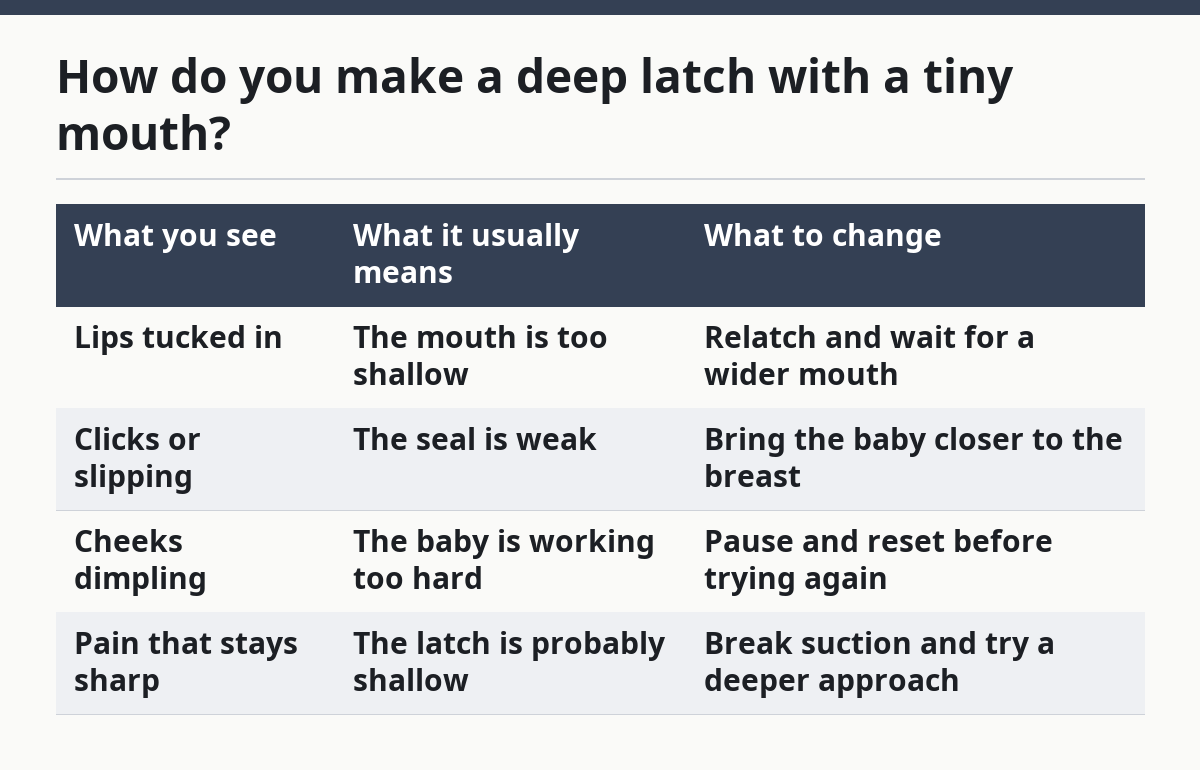
Use these small corrections instead of restarting from scratch every time.
| What you see | What it usually means | What to change |
|---|---|---|
| Lips tucked in | The mouth is too shallow | Relatch and wait for a wider mouth |
| Clicks or slipping | The seal is weak | Bring the baby closer to the breast |
| Cheeks dimpling | The baby is working too hard | Pause and reset before trying again |
| Pain that stays sharp | The latch is probably shallow | Break suction and try a deeper approach |
A preemie who cannot hold a deep latch is not being stubborn. The mouth may still be too small, the tongue may tire quickly, or the baby may not yet coordinate suck, swallow, and breathe for long.
How do you support the breast without pushing the baby off?
The breast is supported best with a steady hand under it, not by pressing hard on the top. Firm pressure can flatten the tissue and push the nipple out of position, which makes a premature baby lose the latch right when it should settle.
A simple hold often works better than a complicated one. Keep fingers well back from the areola so the baby has room to take breast tissue into the mouth. If the hand crowds the latch zone, the baby gets less breast and more nipple, which costs depth and comfort.
This is one reason a lactation consultant can help early. A good set of hands can show whether the breast needs more support, less support, or a different shape for the baby’s mouth. That is not a luxury for a preemie; it can be the difference between a latch that holds for a few sucks and one that falls apart at once. The CDC notes that getting help early can improve breastfeeding outcomes, and the WHO recommends skilled support for newborn feeding problems.
If one side is harder, that is normal. Breasts rarely behave like identical parts, and one side may be fuller, softer, or easier to hold than the other. Use the side that gives the baby the easiest start, then switch later if needed.
The main trade-off is this: more breast support can help the latch, but too much hand pressure can block milk flow and make the mouth slip. The right amount feels steady, not pinched or crowded. If the hold feels awkward, reset the hand before trying again.
When should you stop and try again?
You should stop and try again when the baby starts fighting the latch, loses coordination, or looks worn out. A premature baby often has less reserve, so a bad attempt can burn energy fast and make the next one harder.
Stop if the baby keeps slipping off, clamps down, turns away, or starts crying harder. Stop if the latch hurts in a sharp way, not just as a brief adjustment. Stop if the baby is not able to keep a rhythm after a short try and seems to be working harder than feeding.
This is not giving up. It is protecting the next attempt. A few calm resets usually beat one long struggle, especially in the first days or weeks when the baby’s suck-swallow-breathe pattern is still immature.
A useful rule is to treat the attempt like a short set, not a marathon. If the baby misses the latch two or three times in a row, pause, calm, and start fresh; if that keeps happening, consult a lactation consultant or pediatric clinician rather than pushing through. That pause can be the difference between a baby who learns the pattern and a baby who becomes tired before the latch ever settles.
When is a nipple shield worth trying?
A nipple shield is worth trying when a premature baby needs a little extra help gripping the breast, but it should not be the first answer for every latch problem. It can help some babies hold on to the breast more easily, especially when the mouth is tiny or the latch keeps slipping.
The trade-off is real. A shield can make the nipple easier to grasp, but it can also hide whether the baby is taking a deep enough latch without help. It may also add a step to feeding, which is not ideal if the baby is already tired or the family is trying to keep breastfeeding simple.
This is where a lactation consultant matters most. The consultant can check whether the shield is helping the baby transfer milk or just giving the appearance of a latch. That distinction matters with a preemie, because a pretty latch that does not move milk is not the goal.
| Option | Best use | Main drawback |
|---|---|---|
| Bare breast | Best when the baby can open wide and stay organized | Harder for a tiny mouth at first |
| Nipple shield | Can help with grip and shape | Can add complexity and needs checking |
| Pause and retry | Best when the baby is tired or upset | Slows the session, but protects the next try |
A nipple shield is not the right fix if the latch problem is actually fatigue, poor timing, or a baby who is too upset to organize. In those cases, a shield can mask the real problem instead of solving it.
How do you tell if the latch is working?
The latch is working when the baby stays on the breast without slipping, the mouth looks deep rather than pinched, and feeding seems organized instead of frantic. The breast may feel tugged, but it should not feel sharply painful.

Look for a steady rhythm after the first few sucks. A preemie may not stay on long, but the latch itself should look stable while it lasts. If the baby keeps losing suction, clicking, or sliding to the nipple tip, the latch is probably too shallow.
The result you want is simple: the baby takes the breast, holds the seal, and seems settled enough to keep going for a little while. That little while may be brief in a premature baby, and that can still count as progress.
This is why a single rough attempt should not be treated as failure. With preterm feeding, the small win is the first latch that holds for a moment without panic, pain, or constant slipping. If the latch is still painful after several tries, seek professional help rather than assuming the problem will fix itself.
How does this fit into the bigger breastfeeding plan?
This latch work fits into the larger premature baby breastfeeding plan by building one usable feed at a time. The latch is only one part of the process, and the baby may need more help with stamina, milk transfer, or timing before breastfeeding feels smooth.

For a fuller plan, the hub on breastfeeding a premature baby should sit above this page, because latch is only one piece of the feeding picture. That broader guide handles the bigger framework; this page stays with the first latch and the preterm-specific barriers that make it tricky.
The main mistake is trying to solve every breastfeeding issue at once. A baby who is too tired, too small, or too uncoordinated may need several short, calm attempts before a latch becomes reliable. That is normal for a premature baby and does not mean the effort is failing.
The useful mindset is this: a better latch tomorrow starts with a calmer attempt today. Protect the baby’s energy, keep the breast easy to grasp, and stop before the session turns into a struggle.
Why won’t my premature baby latch?
A premature baby may not latch because the mouth is still too small, the suck-swallow-breathe pattern is still immature, or the baby is too tired to organize the feeding. A fast attempt after crying usually makes it harder, not easier.
The next step is usually to reset with a calm start and try again at an early cue. If the baby keeps missing the latch, a lactation consultant can check the breast shape, the baby’s mouth, and whether a nipple shield might help.
Can a premature baby use a nipple shield?
Yes, a premature baby can sometimes use a nipple shield when the latch is too hard to hold on the bare breast. It may help the baby grip and stay on, which can be useful in the early stage.
The drawback is that a shield can add another layer to monitor, so it is best used with guidance from a lactation consultant. If the baby is too tired, a shield may not fix the core problem.
How long should latch attempts take with a preemie?
Latch attempts should stay short enough that the baby does not lose energy or get upset. A premature baby often does better with brief tries and calm resets than with one long struggle.
If the latch keeps failing after a few tries, stop and try again later. A lactation consultant can help decide whether the problem is timing, breast shape, fatigue, or the need for a nipple shield.
Drafted with AI; not yet reviewed by a person.