
Last updated: November 18, 2026
Key Takeaways
- Assemble the pump, use a clean bottle, and sit with both feet supported.
- Fit the flange, valve, handle, and bottle together so the pump seals.
- Center the nipple in the tunnel and press the shield flat for a full rim seal.
- Pump in short, gentle squeezes until milk starts, then keep a comfortable rhythm.
A manual breast pump works best when the flange fits, the suction starts gently, and you pump in short, steady bursts. If you want milk for a bottle, to relieve fullness, or to get a quick session in a 10–15 minute window, how to use a manual breast pump is simple once the parts are assembled correctly. Quick answer: most manual pumping sessions take 5 to 10 minutes per breast, though the exact time depends on let-down, fit, and comfort.
What you need before you start

How to use a manual breast pump starts with the manual breast pump parts assembled, a clean milk collection bottle, and a comfortable place to sit with both feet supported. Most pumps include a flange, a handle or lever, a valve, and a bottle; if your model has extra silicone pieces, make sure they are seated exactly where the manual shows.
A manual pump is a small hand-powered tool, so setup matters more than force. The flange, also called the breast shield, should sit centered over the nipple with enough room for the nipple to move freely in the tunnel. If the tunnel is too tight, pumping can pinch. If it is too large, suction can weaken and milk removal can be poor.
Before you begin, check two things: the pump is fully assembled, and the bottle is attached securely. A loose seal can break suction as soon as you squeeze the handle. If you are unsure about fit, or if pumping is painful, consult a lactation consultant or another qualified clinician. For a quick reference on pumping basics and breast care, see the site’s pumping guide and breast care advice. According to the Cleveland Clinic, proper flange fit matters because a poor fit can cause pain and reduce milk removal.
If you are pumping from a sore or engorged breast, a manual pump can help because you control the rhythm by hand. If you need to pump many times a day or both breasts at once, this simple device is usually less efficient than a double electric setup. That trade-off is part of the point: manual pumps are useful for short, targeted sessions, not for speed.
How do you assemble a manual breast pump?
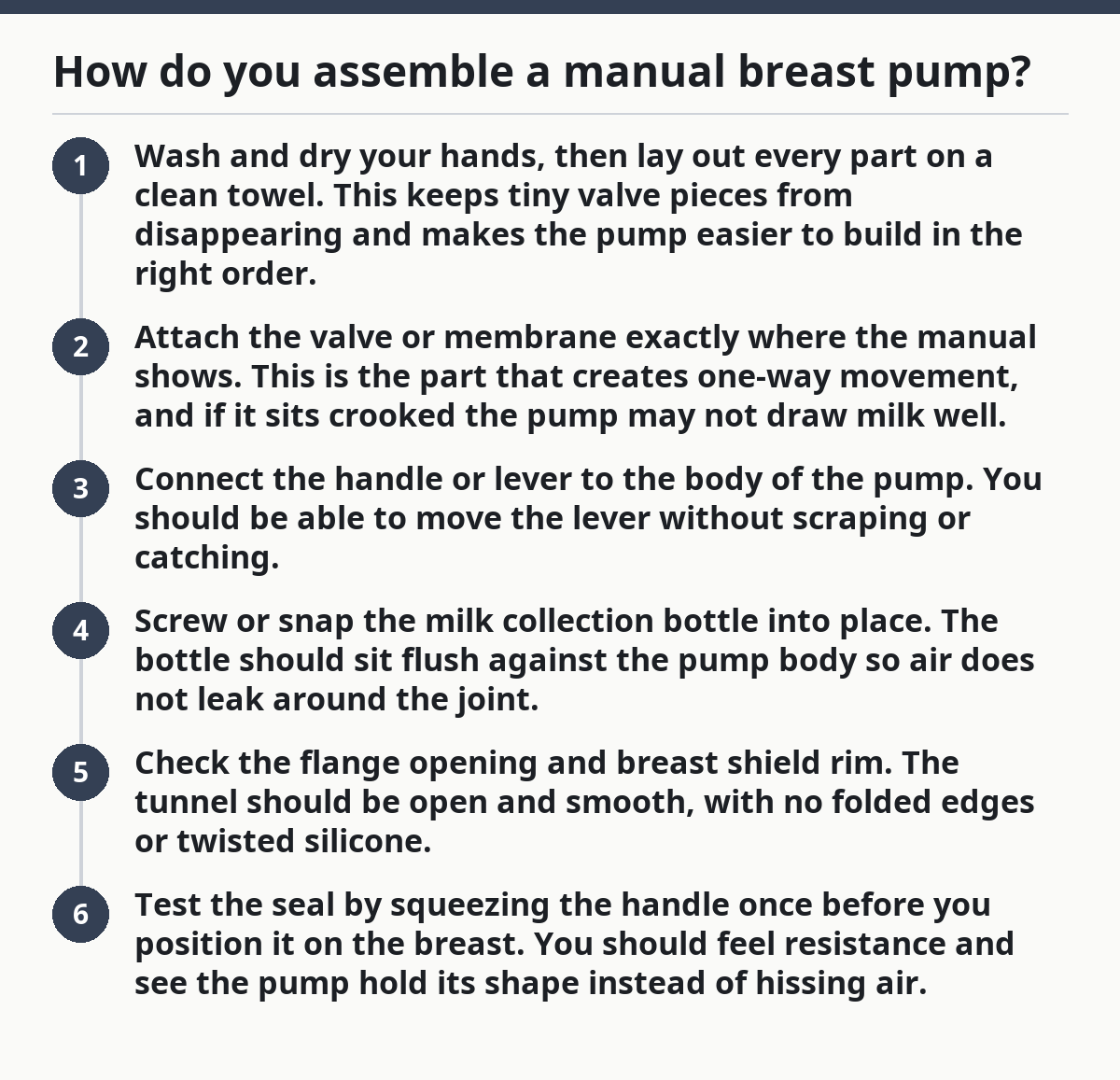
How to use a manual breast pump begins by fitting the flange, valve, handle mechanism, and milk collection bottle together until the pump holds a seal. The connection should feel snug, not forced, and the parts should sit straight rather than tilted.
- Wash and dry your hands, then lay out every part on a clean towel. This keeps tiny valve pieces from disappearing and makes the pump easier to build in the right order.
- Attach the valve or membrane exactly where the manual shows. This is the part that creates one-way movement, and if it sits crooked the pump may not draw milk well.
- Connect the handle or lever to the body of the pump. You should be able to move the lever without scraping or catching.
- Screw or snap the milk collection bottle into place. The bottle should sit flush against the pump body so air does not leak around the joint.
- Check the flange opening and breast shield rim. The tunnel should be open and smooth, with no folded edges or twisted silicone.
- Test the seal by squeezing the handle once before you position it on the breast. You should feel resistance and see the pump hold its shape instead of hissing air.
If a part does not fit, do not force it. A bent valve or crossed thread can ruin suction and make the session frustrating before it even starts. Many manuals use snap-fit or twist-fit parts, but the exact design varies by model; the goal is always the same: airtight assembly. The Mayo Clinic also notes that clean, correctly assembled pump parts support safer use and better milk collection.
How do you position the flange correctly?

How to use a manual breast pump depends on centering the nipple in the tunnel and pressing the breast shield flat against the breast so the rim seals all the way around. The nipple should move freely in the tunnel without rubbing the sides.
Start by leaning slightly forward or sitting upright, whichever keeps your breast supported and relaxed. Place the flange over the nipple, then bring the pump body close enough that the breast tissue fills the shield without being crushed. The nipple should be centered, not pulled to one side. If the flange is angled, the seal often fails on one edge and the pump loses suction.
A good fit usually feels snug but not sharp. You should not need to jam the flange into the breast. With some manual pumps, a flange size around 24 mm is common, but the right fit depends on nipple size, not a label on the box. If the tunnel rubs, the size may be too small. If too much areola is drawn into the tunnel, the size may be too large. The Cleveland Clinic and Mayo Clinic both recommend checking fit carefully because size affects comfort and output.
The first few squeezes should feel like a light tug, not a hard pull. If you feel pinching, grinding, or a sharp edge, stop and reset the flange before continuing. A bad fit can cause low output and sore skin faster than most beginners expect.
How do you create suction by hand?
How to use a manual breast pump here means pumping the handle in short, gentle squeezes until milk starts to flow, then using a steady rhythm that does not hurt. The handle should move smoothly, and the suction should build gradually rather than all at once.
- Hold the flange firmly against the breast with one hand. This keeps the seal from slipping while you work the lever with the other hand.
- Squeeze the handle lightly 2 or 3 times. The first goal is not fast milk flow; it is to start the suction cycle without discomfort.
- Watch for the nipple to be drawn into the tunnel with a pulsing motion. That means the seal is holding and the pump is cycling air correctly.
- Increase the rhythm only if it stays comfortable. A faster hand motion may help let-down begin, but forcing the lever usually does not improve output.
- Once milk begins to drip or stream, keep a steady pace for several minutes. The milk collection bottle should show an increase at the bottom as the session continues.
- Pause every minute or so if your hand or breast feels tense. Manual pumping can fatigue the wrist, especially if you use a firm grip or a heavy lever.
- Switch to the other breast when the first side slows. Single-side pumping is common with manual pumps, and alternating sides often works better than chasing one side for too long.
The main skill here is control. A manual breast pump does not reward brute strength; it rewards rhythm. If the suction feels too strong, shorten the squeeze and reset. If nothing happens after several attempts, check the seal, the valve, and the flange position before blaming your milk supply.
When should you use a manual breast pump?
How to use a manual breast pump is especially useful for short sessions, occasional pumping, and times when you only need one breast at a time. It is especially handy for travel, for a backup in a diaper bag, or for relieving fullness when you do not want to set up a larger machine.
Use it when you want to collect milk after a feeding, soften a breast that feels overfull, or remove milk from one side while the other side rests. Many people like manual pumps for quick runs that take 5 to 10 minutes, because there is no cord, motor, or complex setup. That simplicity is the reason a manual pump earns a place in a nursing bag.
It is less useful if you need to pump often throughout the day, collect larger amounts regularly, or protect supply with repeated long sessions. Hand pumping can tire your wrist and forearm, and it usually takes more attention than an electric model. If your days depend on regular, timed pumping, a manual pump can still serve as a backup, but it is not the fastest tool for that job.
It is also not the right answer for every fit issue. If the flange is too small or too large, a manual pump will still be uncomfortable; it just gives you more control over the pressure you feel. That control helps, but it does not fix a poor fit on its own.
What should a comfortable manual pumping session feel like?
A comfortable manual pumping session feels like a steady pull with no pinching, rubbing, or sharp pain. The breast should feel worked, not bruised, and the hand should not need a white-knuckle grip to keep the pump sealed.
Comfort starts with posture. Sit with your shoulders relaxed and your elbow supported if possible. A small pillow or rolled towel under the pumping arm can reduce strain during a 10-minute session. If you have to hunch over, your back and neck will often tire before the breast does.
The suction should be enough to draw milk, but not so strong that the nipple is pulled hard into the tunnel. More suction is not automatically better. A lot of beginners try to squeeze harder because they expect more milk, but that usually creates more pain and a weaker session after a few minutes.
Watch for signs that something is off: the nipple turns pale, the skin around the flange looks pinched, or the bottle stays nearly empty despite repeated pumping. Those are clues to stop and check the fit, the seal, or the valve. If discomfort continues even after adjusting the pump, speak with a lactation consultant or another qualified clinician, since nipple pain can have causes that a pump adjustment will not solve.
Common mistakes that waste milk or cause pain
The most common mistakes are poor flange fit, rushed suction, and a weak seal at the bottle or valve. Each one can cut output, make the session longer, or leave the nipple sore.
If the flange is too small, the nipple can rub the tunnel and come away tender. If it is too large, more breast tissue may be pulled into the shield, which can feel odd and reduce efficient milk removal. The fix is simple: choose the size that centers the nipple without crowding it.
If you squeeze the handle too hard at the start, the session can feel abrupt and painful. The better move is to begin with 2 or 3 light squeezes and let the suction build. Manual pumps work best when the motion feels almost boring. That is a good sign.
If milk is not flowing, many people keep pumping harder instead of checking the seal. That costs time and can leave the hand aching. A loose valve, tilted flange, or bottle thread that is not fully tightened can all break suction. Re-seat the parts before you keep going.
If you try to pump with poor support under your arm or shoulder, fatigue builds quickly. A manual pump asks the hand and forearm to do repeat work. Use your body position to reduce strain, especially in longer sessions.
How do you use a manual pump on one side at a time?
How to use a manual breast pump on one side at a time means pumping one breast until the milk slows, then switching sides or finishing on the other breast later. Single-side pumping is the normal way to use many manual pumps because one hand controls the lever while the other stabilizes the flange.
Start on the side that feels fullest or most uncomfortable. Pump for several minutes until the milk flow tapers. Then move to the second breast and repeat. Some people alternate every 5 minutes; others stay longer on one side if let-down is slower. The exact timing matters less than staying comfortable and keeping the seal intact.
This method works well when you only need a modest amount of milk or when you are using the pump to relieve pressure. It is also easier to manage than trying to keep both breasts going at once with a hand-powered tool. If you need both hands free or a more structured pumping pattern, a manual pump is the wrong tool for that job.
Milk collection bottles on manual pumps are usually small enough for short sessions, which is useful for quick use but not ideal for long pumping runs. When the bottle is nearly full, stop and transfer the milk according to your normal storage routine.
FAQ
How does a manual breast pump work?
A manual breast pump works by creating suction with hand pressure instead of a motor. When you squeeze the handle, the pressure changes inside the pump body, drawing the nipple into the flange tunnel and helping milk move into the collection bottle. The cycle repeats each time you squeeze and release.
Is a manual breast pump good for travel?
A manual breast pump is good for travel because it does not need power, charging, or a wall outlet. It also takes less space than many electric pumps, which makes it easy to keep in a carry-on or diaper bag. The trade-off is that your hand does the work, so it is better for short sessions than long ones.
Can a manual pump hurt if used wrong?
A manual pump can hurt if the flange fits badly, the suction is too strong, or the lever is squeezed too hard. Pain is a sign to stop and adjust the fit before continuing. If discomfort keeps happening after you correct the setup, a lactation consultant or clinician can help check for a better fit or another cause.
Drafted with AI; not yet reviewed by a person.