
Last updated: November 18, 2026
Quick answer: most parents can burp a breastfed baby in 1 to 5 minutes, then stop when the baby relaxes and stays comfortable. This guide to how to burp a breastfed baby and know when to stop shows which positions to try, when to pause, and when to quit.
Your breastfed baby may need help with burping, spit-up, and gas relief when a feed feels sticky or tense. Stop once the baby relaxes and nothing comes up after a short try. The steps below show which burping positions work, when to pause, and when to quit.
Key takeaways
- Burping is a short feeding break, not a full project.
- A calm baby with loose hands, a soft belly, and a settled face usually does not need more tapping.
- If your baby cries harder, arches, or keeps swallowing air, change the position once before you give up.
- A little spit-up after burping is common and not the same as a problem.
- The goal is comfort, not a perfect burp every single time.
How to burp a breastfed baby, step by step

Burping a breastfed baby means using one position, one short try, and one clear stop point so the feed keeps moving without turning into a wrestling match. The basic routine takes 1 to 5 minutes, and that is enough for most babies.
- Hold your baby upright against your chest for a feeding break. Keep the chin clear and the body tall, then wait for the swallow pattern to slow.
- Support the head and neck with one hand while you rest the baby high on your shoulder or chest. The baby should feel secure, not bent forward at the waist; if you are unsure, ask a pediatric clinician or lactation professional, and see the AAP guidance on burping and spit-up.
- Pat the upper back with a cupped hand in a light, steady rhythm. A firm thump is too much; gentle pressure is enough for air to rise.
- Watch the face and body for a release. A burp, a softer belly, or a calmer suck pattern means you can stop this round.
- Switch to a seated-on-lap position if nothing happens after a short try. Keep the baby upright, lean the body slightly forward, and support the jaw and chest.
- Stop when the baby settles, stays comfortable, and shows no more gas movement. If the baby is drowsy and feeding well, you do not need to force a louder burp.
The truth is, a lot of parents keep patting long after the baby is done. That usually buys you a crankier baby, not more air.
What this looks like in real life
You may need to burp mid-feed, after one breast, or at the end of a feed. Breastfed babies often swallow less air than bottle-fed babies, but they can still pick up bubbles during a strong letdown or a fast suck.
Use one of these positions:
- Shoulder hold: often a good first try for a sleepy baby who likes upright pressure.
- Sitting on lap: useful when the shoulder hold gives no result.
- Face-down across the lap: short and controlled, with the tummy supported, not compressed.
A baby who burps after 30 seconds is done for that round. A baby who stays calm for 3 minutes without burping is often done too. That is the part many people miss.
Which burping position should I try first?
The shoulder hold is often a good first try for many breastfed babies because it gives the chest a tall, upright line and makes the back easy to pat. If that fails after a short try, move once to a seated position instead of repeating the same thing for 10 minutes.
Here’s the catch: not every baby likes the same angle. A position that works at 2 weeks may fail at 2 months as the baby gets heavier and stronger.
Position guide
- Shoulder hold: Good for a baby with sleepy feeding or small spit-up.
- Lap sit: Good when the baby seems gassy but not upset.
- Across the lap: Good for brief burp tries when the baby needs a different angle.
A face-down position should stay brief and supported. The baby’s head must never dangle, and the belly should not be pressed hard against your leg.
The best part, for many parents, is that you only need one or two positions, not a whole routine. If a position makes the baby fussier after a minute, stop and switch.
When should I burp during a breastfeed?
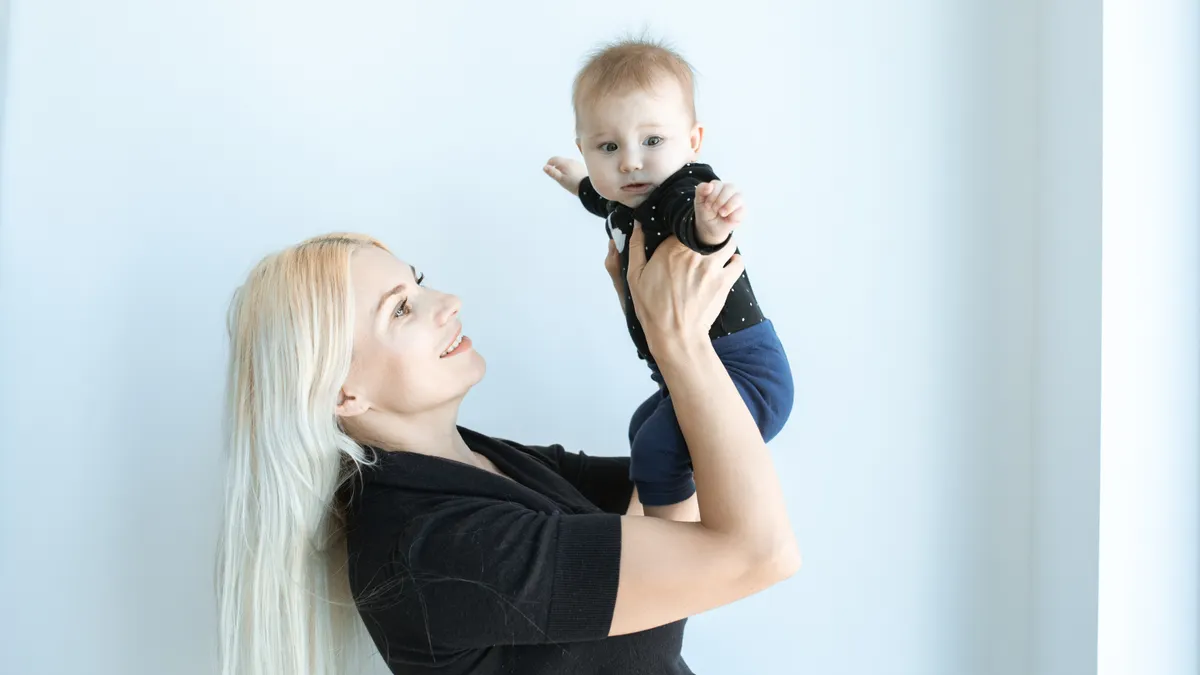
You should burp during a breastfeed when the baby slows down, pulls off the breast, or starts gulping and fussing between swallows. That usually means there is air in the tummy or the flow has changed enough to need a break.
Picture this: you are halfway through a feed, the baby starts squirming, and the latch still looks fine. That is a good time for a feeding break, not a sign that the whole feed has gone wrong.
Good times to pause
- After the first breast: many babies do better with a short burp before the second side.
- Mid-feed: helpful if the baby gulps fast or arches.
- At the end: useful if the baby looks full but a little tense.
If the baby nurses smoothly and falls asleep with a loose mouth and soft hands, you may not need a burp right then. A short pause of 1 to 2 minutes is enough to check.
On the flip side, if your baby has a strong letdown, burping more often can help keep the feed comfortable. That is still about comfort, not rule-following.
How do I know when to stop burping?
You know when to stop when the baby stays calm, stops squirming, and gives no sign that more air is trapped after a short try. A burping session that lasts a few minutes is usually enough.
The truth is, there is no prize for getting a burp out of every feed. Stop when the baby looks settled, even if nothing dramatic happened.
Stop burping when you see these signs
- The baby’s face relaxes.
- Hands open instead of clenching.
- The body stops pushing backward.
- No burp comes after a short try in one position.
- The baby returns to feeding, dozing, or resting calmly.
Do not keep going just because you expect a burp. If you are tapping for several minutes and the baby is still quiet and comfortable, you are done.
A baby can also release air later, with a small spit-up or a soft burp after being held upright. That is normal enough that it does not need a second full round unless the baby seems bothered.
What if my baby still seems gassy after burping?
Your baby may still seem gassy even after a burp because gas is not always trapped in one place. Sometimes the problem is a swallowed pocket of air; sometimes it is just normal tummy movement after a feed.
Now, you might be wondering what to do next. Start with one simple change, not five at once.
Try this instead of pushing longer burps
- Hold the baby upright for 10 to 20 minutes after the feed.
- Pause and burp after a shorter stretch next time.
- Change from a shoulder hold to a lap sit.
- Check whether the baby is gulping at the breast.
A little spit-up after a burp can happen with no real problem. If the baby is comfortable, gaining weight, and able to feed again, the gas usually passes on its own.
The one thing to avoid is treating every wiggle as a burping emergency; if your baby seems unwell, check with a pediatric clinician. That turns a normal feed into a long, tense session.
Common mistakes that make burping harder
A lot of burping trouble comes from small handling errors, not from the baby being “hard to burp.” Fix the setup and the feed often gets easier in under 2 minutes.
Picture this: you are patting hard, the baby is stiff, and nothing changes. The issue is often the method, not the baby.
Mistakes and what to do instead
-
Holding the baby too low.
Air rises best when the chest stays upright. Lift the baby higher on your shoulder or sit the baby tall on your lap. -
Patting too hard.
Hard pats can make the baby tense. Use a cupped hand and a light rhythm. -
Trying the same position too long.
If one hold does nothing after a short try, switch once and then stop. -
Pressing on the belly.
Too much pressure can make spit-up worse. Keep the torso supported, not squeezed. -
Expecting a burp every time.
Some breastfed babies take in less air and need little or no burping at all.
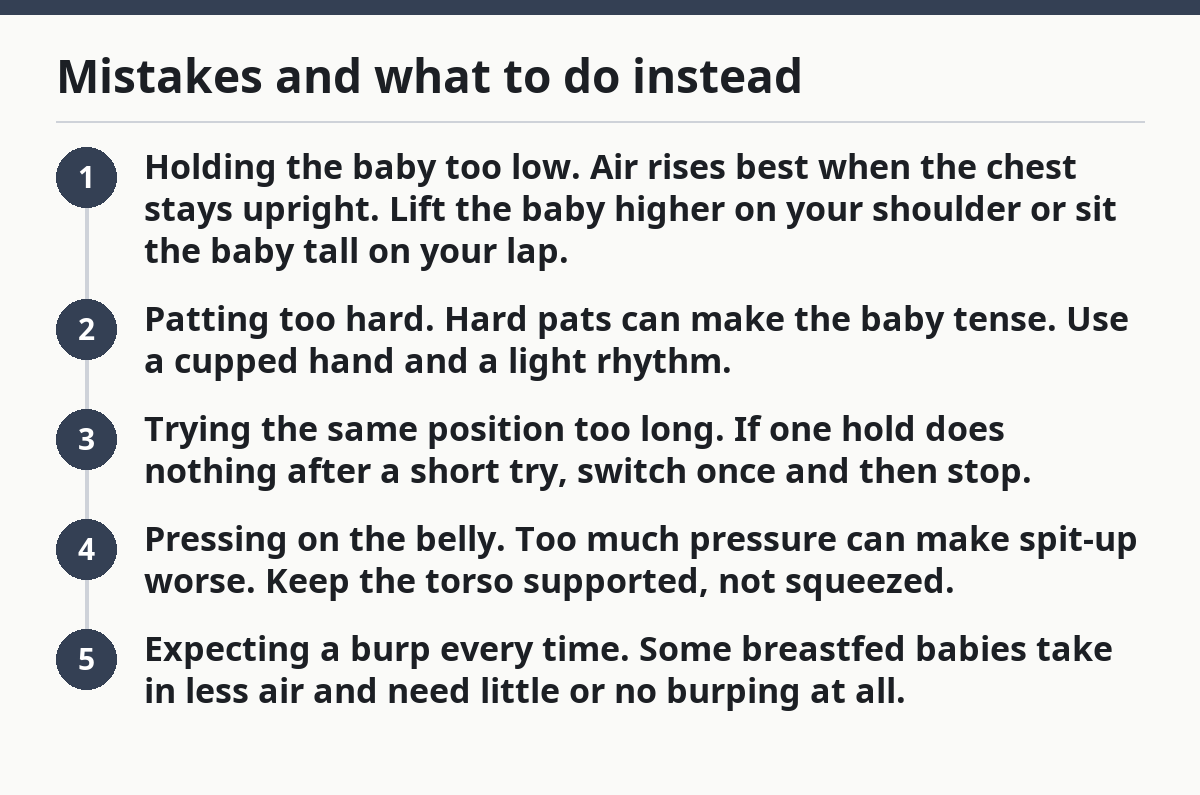
This is one of those tasks where less force works better. Clean, steady support beats repeated thumping.
When a burp is enough — and when the feed can just end
A burp is enough when the baby’s body tells you the feed can move on or end without more effort. That usually means calm breathing, loose arms, and a settled face after one short try.
The best part, for many parents, is that you do not need to wait for a loud, dramatic release. A soft burp, a small spit-up, or even no burp at all can still mean the trapped air is gone.
End the burping session when
- the baby is relaxed after 1 to 3 minutes in one position;
- the baby has already burped once and seems comfortable;
- the baby falls asleep without signs of discomfort;
- the baby starts to fuss more from handling than from gas.
If the baby seems uncomfortable every feed, or spit-up is frequent and forceful, talk with a pediatric clinician or lactation professional. This page is for routine burping, not for feeding problems that need a separate check.
For more day-to-day help with feeding routines, the breastfeeding routines and day-to-day management hub is the right place to start.
do breastfed babies need to burp every time?
No, breastfed babies do not need to burp every time. Many take in less air than bottle-fed babies, so some feeds end with no burp at all.
If your baby is relaxed, feeds well, and settles after a short pause, you can stop. A quick upright hold is enough to check.
what if my baby won’t burp?
If your baby won’t burp, stop after a short try and move on if the baby seems calm. A baby can be done without making a sound.
Try one different position for a minute or two, then end the burping session. If the baby is still upset after most feeds, or seems painful and hard to settle, talk with a pediatric clinician.
how long should i try to burp a baby?
Try to burp a baby for 1 to 5 minutes at most in one position. If nothing happens and the baby stays comfortable, stop.
If the baby gets fussier, switch once to a different hold, then end the attempt. Long burping sessions usually add strain without adding much relief.
Drafted with AI; not yet reviewed by a person.